When a parent who has bathed independently for 70 years starts refusing, it is easy to read it as defiance or neglect. It usually is not that. Bathing is private, physically demanding and, for many older adults, frightening or painful. The most useful question is not “how do I make them?” but “what is getting in the way?”
This guide covers the common causes, what the Alzheimer’s Association and nursing research suggest, how to set up the bathroom, and alternatives to a full bath. It is written mainly for refusal that is new or stressful, and much of it applies whether or not your parent has dementia.
The short answer
Look for the reason before you push: pain, fear of falling, cold, embarrassment, loss of control, or memory changes. Then change the setup, give choices, protect dignity and let your parent do as much as they can. If your parent resists, stop and try again later rather than forcing it. A full bath is not the only way to stay clean, and a sudden change is worth telling their doctor.
In this guide
What might be behind the refusal?
| What you notice | A possible cause | What to try |
|---|---|---|
| Grips the edge, won’t step in | Fear of falling, balance, or depth-perception problems | Grab bars, a non-skid mat, a seat, and a handheld shower. Ask the doctor about a balance check. |
| Stiff, winces, refuses certain steps | Pain, such as arthritis | Mention it to the doctor or pharmacist. Keep the room warm and use a seat so they stand less. |
| Shivers, complains it is cold | A cold or drafty room, or cool water | Warm the room, pad the seat, use big towels, and check the water temperature |
| Covers up, says “I can do it myself” | Embarrassment or loss of control | Offer choices, give a task, cover with a towel, and let them do what they can |
| Does not seem to think they need one | Memory changes | Keep the usual time of day, coach one step at a time, and ask the doctor about a memory check |
| Withdrawn, tired, neglecting other self-care | Low mood or illness | Talk to the doctor. Changes like this are worth a medical look. |
The first four rows follow the causes listed in an American Journal of Nursing review of bathing research, which names pain, fatigue and weakness, confusion, anxiety about being naked in front of others, fear of falling, and discomfort from cold rooms or harsh water spray. It also notes that giving older adults a choice about when and how to bathe, and the chance to bathe themselves, promotes success. Peer-reviewed studies link fear of falling with both pain and depression in older adults, which is one more reason to raise a new refusal with a doctor.
What helps in the moment?
The Alzheimer’s Association’s bathing guidance is written for dementia, but its principles are sound for anyone who finds bathing uncomfortable:
- Give choices. “Would you like to bathe now or in 15 minutes?” or “a bath or a shower?” It also suggests saying “let’s wash up” rather than “let’s take a bath.”
- Give a role. Have your parent hold a washcloth, sponge or shampoo bottle.
- Protect dignity and warmth. Wrap them in a large towel while undressing, and consider letting them get into the shower with a towel on.
- Consider who helps. A familiar person of the same sex may be more comfortable.
- Keep the routine. Bathe at the time of day your parent is used to.
- Coach one step at a time with simple phrases such as “sit down” and “here’s the soap,” or show them and gently guide their hand.
- Do the hardest part last or differently. Washing hair can be the most difficult task. A washcloth over the eyes reduces water on the face.
- If they resist, stop. Distract them and try again later. Pushing tends to make the next attempt harder.
UCLA Health’s caregiver training describes a daughter who calls it a “spa treatment,” tells her mother what she is about to do before each step, and asks her mother to test the water temperature. The approach is calm, slow and respectful of modesty.
Setting up the bathroom
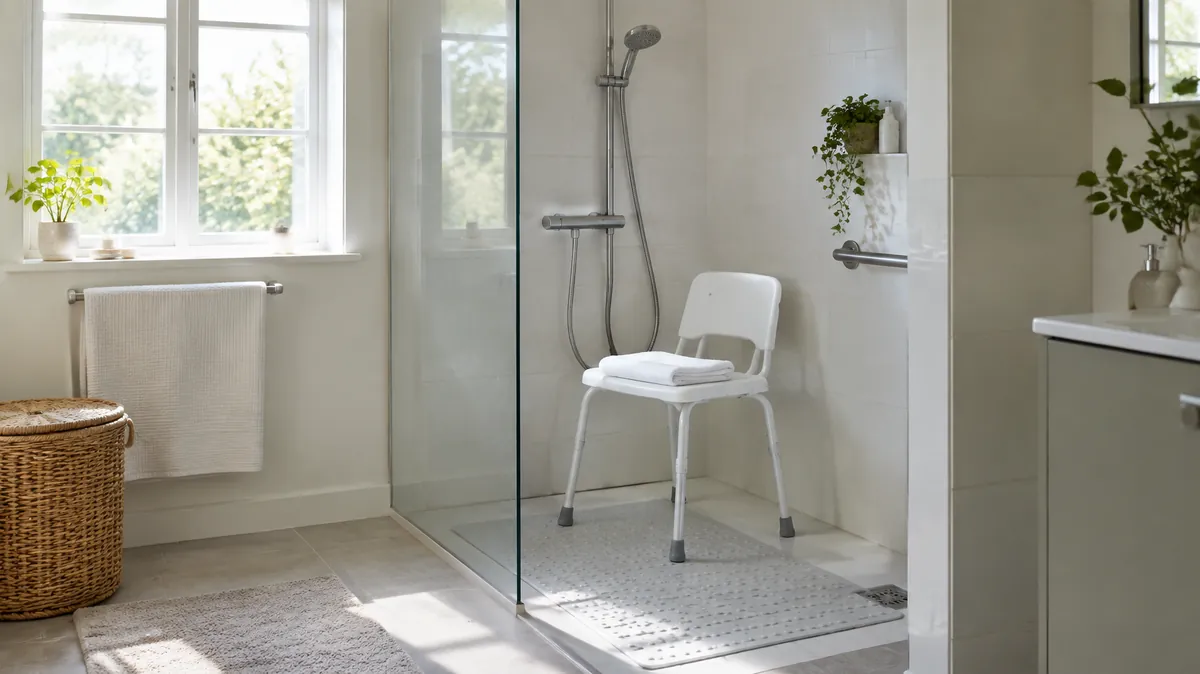
- Have everything ready first: large towels, shampoo, soap and a bath stool or bench, before you tell your parent it is time.
- Make the room comfortable. Check the temperature and pad the seat with towels.
- Check the water. The Alzheimer’s Association says to check the temperature even if your parent draws their own bath, and to lower the water heater thermostat to prevent scalding.
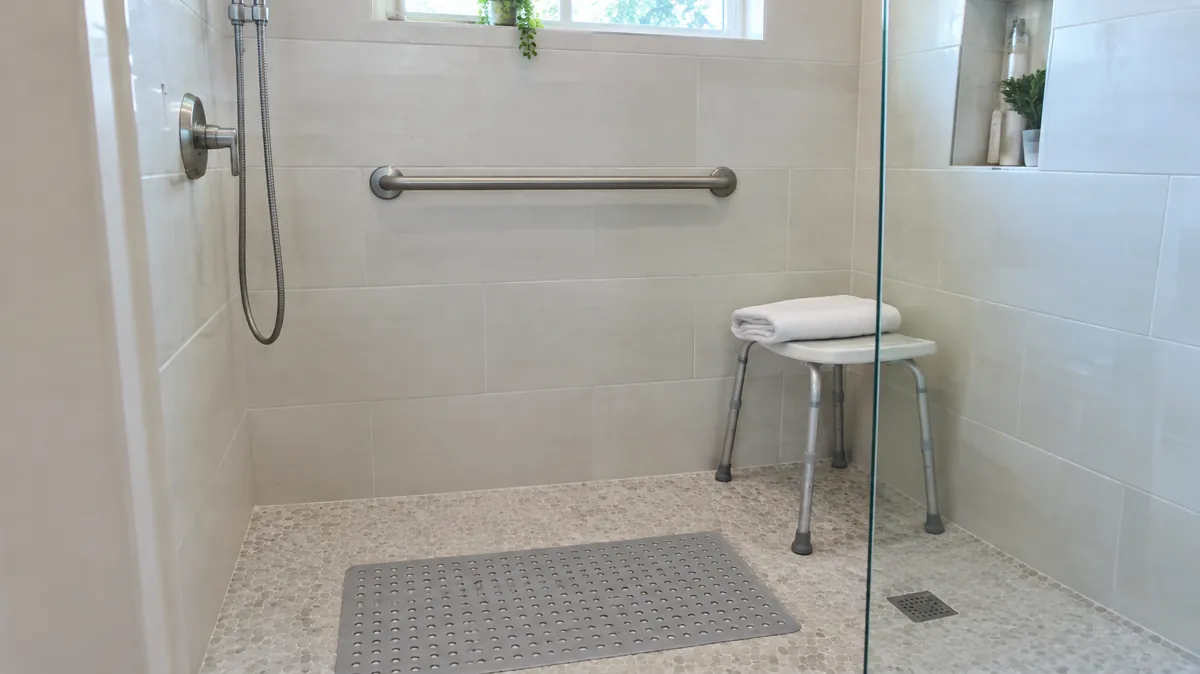
- Make it safe. Install grab bars, use a seat in the tub or shower, put a non-skid mat down, and keep the floor free of puddles. See our bathroom safety checklist and grab bar guide.
Shower chair or tub transfer bench
Handheld shower head
How we handle product links
AgingSteady earns a commission on some links, which is explained in our affiliate disclosure. We have not tested these products, and the options above are not recommendations of a specific product.
The Home Safety Checklist
Room-by-room, with the bathroom first. A one-page checklist you can walk through with your parent.
Alternatives to a full bath
The Alzheimer’s Association advises being open to adjusting your standards, since your preferences may not match your parent’s needs. Options it lists:
- Wash one part of the body each day of the week.
- Shampoo hair at another time or on a different day.
- Give a sponge bath with a washcloth between showers or baths.
- Use a non-rinse soap product with warm, wet towels, which the Alzheimer’s Association says research finds equally effective when used regularly and thoroughly. It is sold at pharmacies and drug stores.
- Have a trained caregiver or nursing assistant come to the house.
Whatever the method, make sure the genital area and skin folds are washed, especially if incontinence is a problem, and check for rashes and sores afterward. Our guide to incontinence products covers that side.
When should you get help?
- The refusal is new or sudden. Mention it to the doctor, since pain, illness, low mood or memory changes can sit behind it.
- Bathing keeps turning into a fight or your parent becomes aggressive. Stop, tell the doctor, and consider professional help.
- You are finding rashes, sores or skin problems. The doctor or a nurse can advise.
- You are exhausted. See our caregiver burnout signs, and our home care vs assisted living guide for options that take bathing off your plate.
Common questions
Why does my elderly parent refuse to bathe?
It is rarely stubbornness. An American Journal of Nursing article reviewing research on assisted bathing lists pain, fatigue and weakness, confusion, anxiety about being naked in front of others, fear of falling, and discomfort from cold rooms or harsh water spray. Bathing is also a private task, so being helped with it can feel like a loss of control. For people with dementia, the Alzheimer's Association adds that depth-perception problems can make stepping into water frightening, and that the person may not feel any need to bathe. A new or sudden refusal is worth mentioning to the doctor.
How do I get my parent with dementia to bathe?
The Alzheimer's Association suggests giving choices, such as bathing now or in 15 minutes, or saying "let's wash up" instead of "let's take a bath." Gather supplies before you start, keep the room warm, check the water temperature yourself, and give your parent a role, such as holding the washcloth. Bathe at the time of day they are used to, coach one step at a time, and protect their privacy with a towel. If they resist, distract them and try again later.
How often does an elderly person need to bathe?
We found no authoritative schedule. The Alzheimer's Association advises being open to adjusting your own standards, and suggests alternatives such as washing one part of the body each day, a sponge bath between showers, or a no-rinse soap product used with warm, wet towels, which it says research finds equally effective. It also says to make sure the genital area is washed, especially if incontinence is a problem, and to wash between skin folds. Ask the doctor or a nurse what is right for your parent.
What if my parent gets angry or aggressive during bathing?
Stop and give it a rest. The Alzheimer's Association says that if the person is resistant you should distract them and try again later, and it notes that in some cases resistance can escalate and become unsafe and upsetting for everyone. Pushing through tends to make the next attempt harder. Tell the doctor if this keeps happening, and consider having a trained caregiver help, since some people accept bathing from a professional more easily than from family.
Should I hire someone to help with bathing?
It is a reasonable option. The Alzheimer's Association lists having a trained caregiver or nursing assistant come to the house to bathe the person. Some caregivers report that a parent accepts help from a professional more readily than from a son or daughter, which can take the strain off an intimate task. Our guide to home care options covers the costs and questions to ask.
Is it safe for my parent to bathe alone?
That depends on their balance, memory and strength. The Alzheimer's Association says to supervise as needed, especially if the person is unsteady, and to check the water temperature even if they draw their own bath. Grab bars, a non-skid mat and a seat in the tub or shower all help, and the water heater can be lowered to prevent scalding. If your parent has fallen or nearly fallen in the bathroom, our bathroom safety checklist is a good place to start.
One important caveat
This guide is general information and is not medical advice. Refusal to bathe can have medical causes. Talk to your parent’s doctor about pain, mood, memory changes and skin problems.
Sources
Alzheimer’s Association, Bathing (read in full in October 2026). · American Journal of Nursing, The Bathing of Older Adults With Dementia (2006; read from its published abstract and excerpts, and it studies dementia, though the causes it lists apply more widely). · UCLA Health, Refusal to Bathe (caregiver training; read from an excerpt). · Peer-reviewed studies linking fear of falling with depression and with pain (read from abstracts). Other care-company guides we read repeat advice such as bathing frequency; we do not cite them, and we found no authoritative schedule for how often to bathe. We welcome corrections through our contact page.