The Room-by-Room Home Fall Risk Checklist
A printable walkthrough of the five rooms where falls and accidents happen most for aging parents — with exactly what to fix in each one, this week.
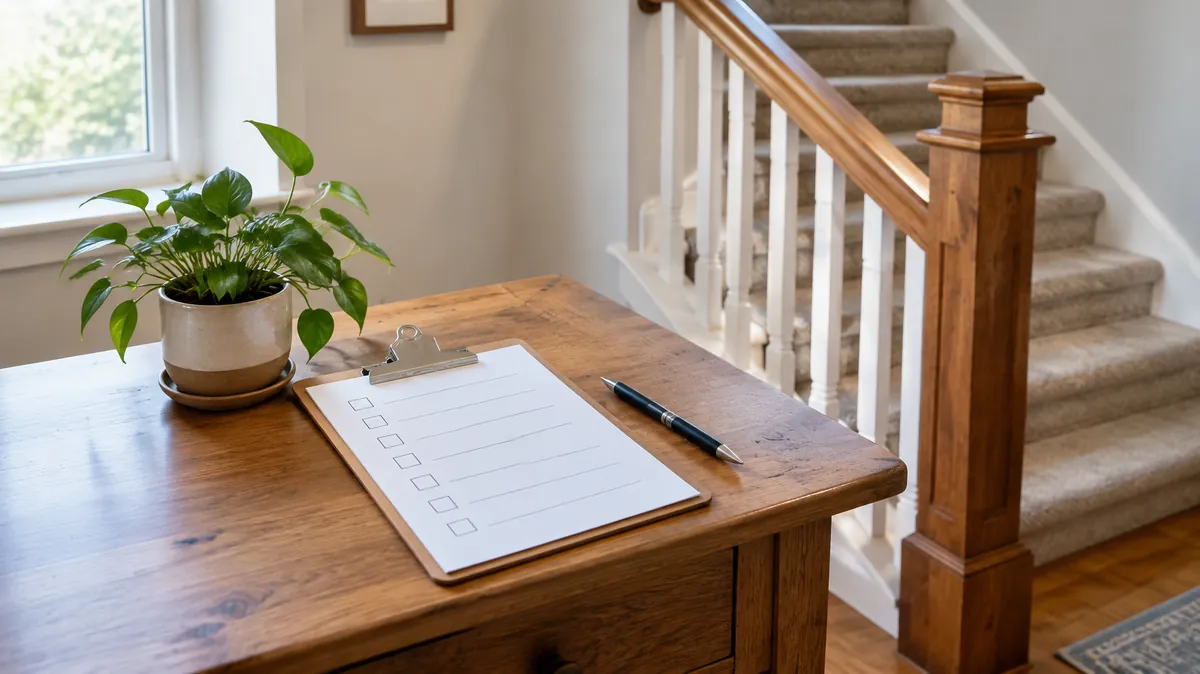
What's inside
- The bathroom checklist covering the 5 highest-risk spots for falls
- A bedroom walkthrough for nighttime bathroom trips, the most common time falls happen
- Kitchen fixes for reaching, standing, and fire safety
- Stairs and hallways: lighting, handrails, and trip hazards
- A one-page "do this weekend" priority list if you're short on time
What a home fall risk assessment actually checks for
A clinical fall risk assessment — the kind a doctor, physical therapist, or home health nurse performs — really covers two separate things. One is physical: balance, gait, medication side effects, and vision. The other is environmental: the specific hazards in the home itself. This checklist covers the environmental half, which any family member can genuinely evaluate without clinical training. The physical half is worth raising with a doctor directly, especially if a fall has already happened — a home can be made perfectly safe and someone can still be at real risk if a medication or balance issue hasn't been addressed.
Bathroom
The single highest-risk room in the house, and where a wet, hard surface meets the exact transition — getting in and out of a tub or shower — where most falls happen. A properly wall-mounted grab bar inside the tub or shower is the highest-priority fix if you can only do one thing this weekend; see our grab bar comparison for specific picks by situation. A non-slip bath mat, a raised toilet seat if standing up is difficult, and a shower chair round out the rest. Check that the bath mat itself has a rubber backing — decorative mats without one are a hazard, not a fix.
Bedroom
Most nighttime falls happen on the walk to the bathroom, disoriented and often without turning on a light. A motion-activated night light along that specific path (not just a room light) removes the excuse to skip it. A bed height that lets both feet touch the floor without stretching down matters more than it sounds like it would, and a clear, obstacle-free path — no rugs, no cords, no furniture edges to navigate around in the dark — is the single cheapest fix in this whole checklist.
Kitchen
Overhead reaching for frequently used items is a common, underestimated risk — moving everyday dishes and food to waist-to-shoulder height removes the need for a step stool entirely, which is itself one of the more dangerous objects in most kitchens. A stable chair for standing-heavy tasks like dishes or cooking, and confirming stovetop knobs are easy to see and operate (a real issue if vision has changed), round out the higher-value fixes here.
Stairs and hallways
Handrails on both sides of any staircase, not just one, and lighting bright enough to see each step clearly at night — a switch at both the top and bottom of the stairs, not just one end, removes the temptation to navigate them in the dark. Hallway rugs are a trip hazard disproportionate to how minor they look; removing or securing them with non-slip backing is a five-minute fix with real impact.
Why we built this
Most safety checklists online are either too vague ("remove tripping hazards") or written for a home inspector, not a worried adult child trying to figure out where to start. This one is built to be walked room to room in an afternoon, with specific, doable fixes at every stop — not a wall of general advice.
Who this is for
Adult children who want a clear starting point before a first visit, after a recent fall or near-miss, or simply because "something feels off" about how safe the house still is. It also works well to bring along on a visit and walk through together.
Common questions
What does a fall risk assessment actually include?
A clinical assessment covers a physical evaluation (balance, gait, medications, vision) and an environmental walkthrough of the home. This checklist covers the environmental half — the physical half is worth discussing with a doctor, especially after a fall has already happened.
Is a room-by-room checklist enough, or do I need a professional assessment?
A checklist is a reasonable starting point if no fall has happened yet. If a fall has already occurred, a professional in-home assessment — sometimes covered by Medicare with a doctor's referral — adds the physical/medical evaluation a checklist can't.
How often should a home safety check be redone?
At least once a year, and immediately after any real change — a fall, a new mobility aid, a hospital stay, or a noticeable decline in balance or vision.
Get your free copy
Confirm your email and the checklist opens right away. After that, the occasional practical guide — never more than one email a week.
No spam. Unsubscribe anytime. See our privacy policy.
Related guides
Medical Alert Systems Compared
Which type actually fits your parent's daily routine.
SafetyBathroom Safety Checklist
The five highest-risk spots, explained in detail.
SafetyFall Prevention Exercises
The other half of a fall-prevention plan — building the strength and balance a safe home alone can't provide.
Caregiver SupportCaregiver Burnout: Signs and Help
What to watch for in yourself, and what actually helps.