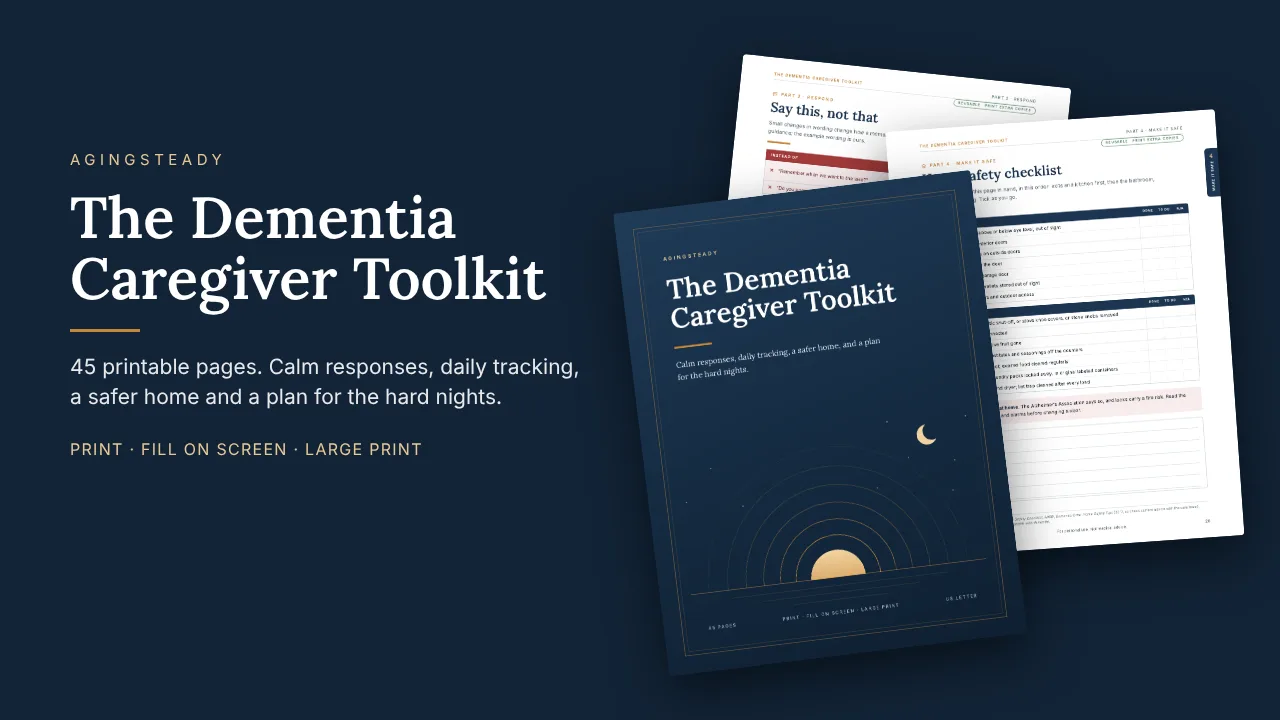
Caring for someone with dementia means a lot of hard moments with little time to think. This toolkit puts the answers on paper: what to say, what to check first, how to spot a pattern, how to make the home safer, and what to do if the plan is not enough.
What is inside
- Understand. Behavior is communication, the 60-second check, what to do about a sudden change, and why evenings are hard.
- Respond. The calm response, say this not that, a hard-moments playbook and cut-out wallet cards.
- Track. Behavior and trigger log, 24-hour pattern map, sleep and night log, daily routine, medication and change log, and a doctor visit brief.
- Make it safe. Home safety checklists, a night safety plan, a wandering profile, the first 15 minutes if they go missing, and a responder handoff sheet.
- Share the load. A respite handover, family roles, a care team directory and how to visit well.
- Look after you. A weekly check-in, a break plan and what to do when the plan is not enough.
You get three PDFs: the 45-page print edition, a fillable edition for typing on a computer, and a 9-page large-print edition of the most-used pages.
A look inside
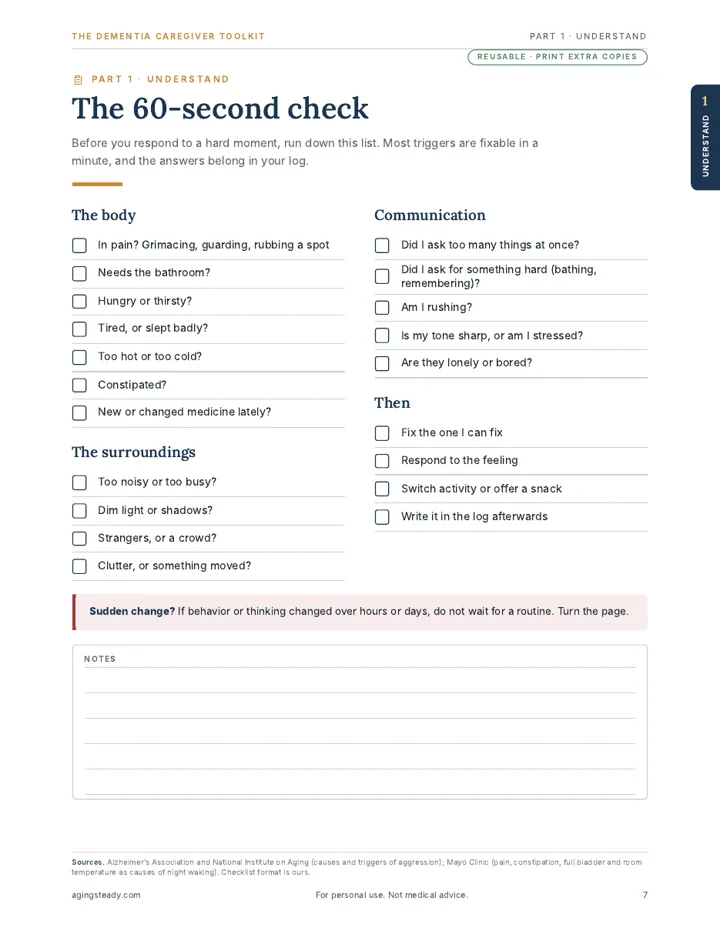
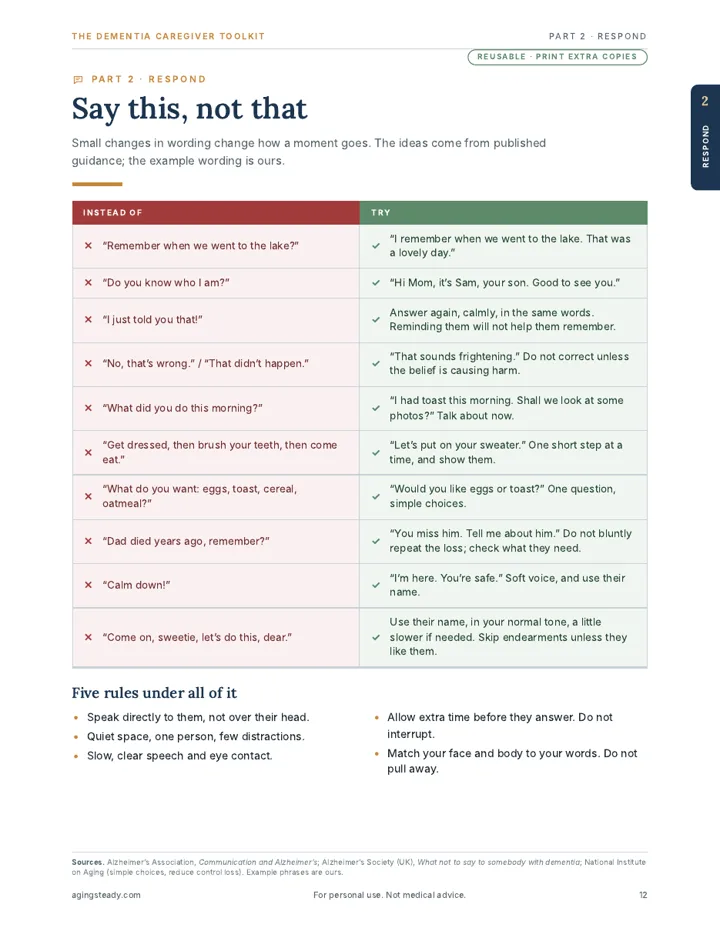
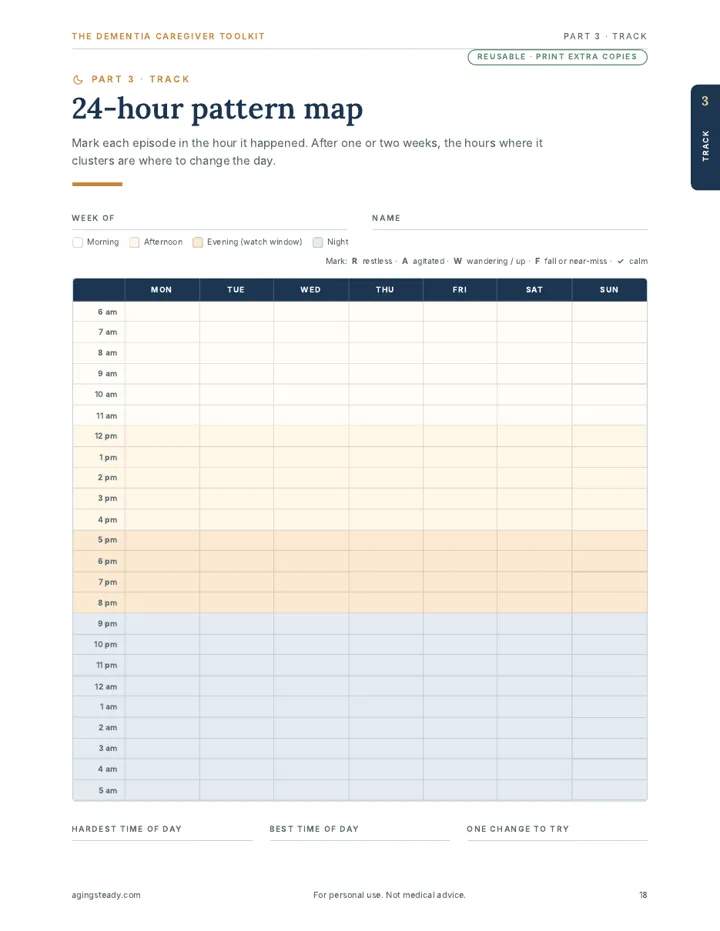
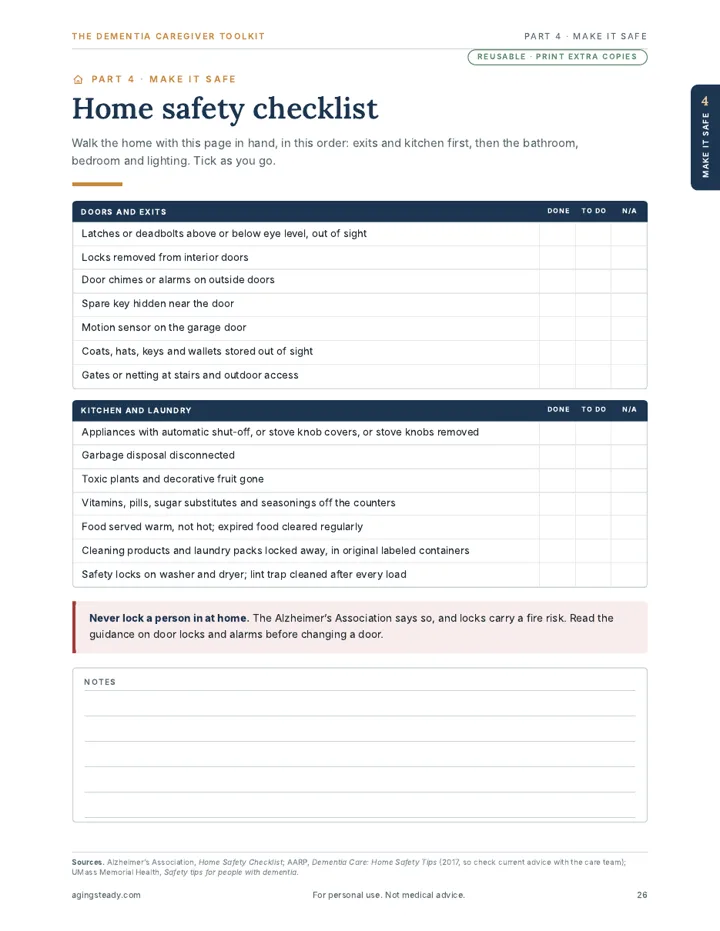
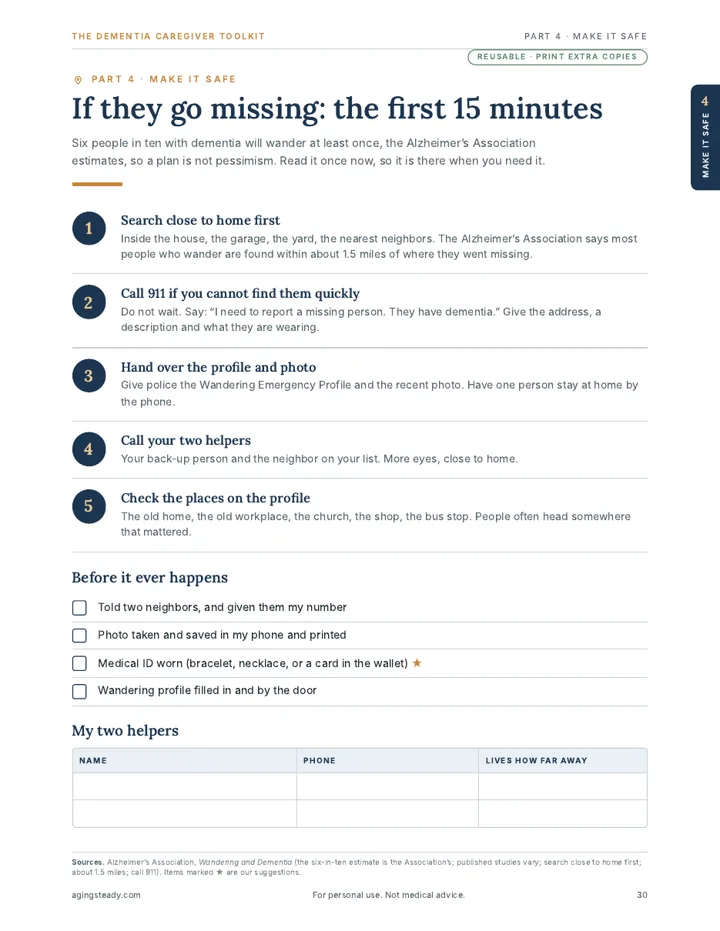
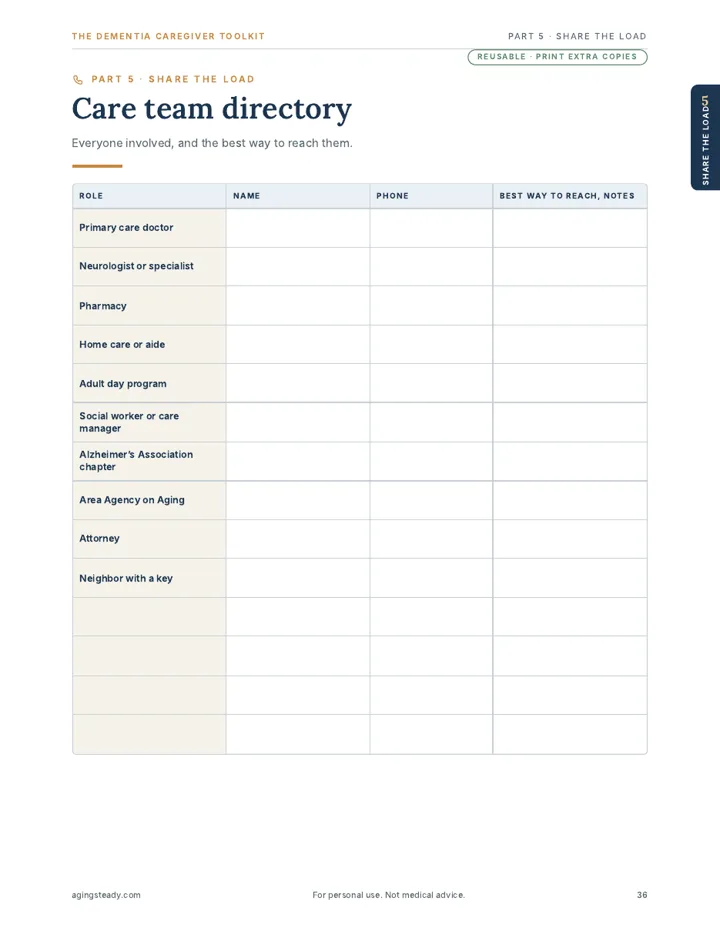
Try 9 pages free
Get a free sample of the toolkit: the 60-second check, say-this-not-that, a home safety checklist and more.
Where the content comes from
The toolkit draws on the Alzheimer’s Association, the National Institute on Aging, Mayo Clinic and other published sources, all listed on a Sources page inside. Our own suggestions are marked with a star, and fictional examples are labeled. We are not doctors or lawyers. This is an organizing tool, not medical advice. A sudden change in behavior needs a doctor, and in a life-threatening emergency call 911.
Questions
What is in the Dementia Caregiver Toolkit?
A 45-page printable PDF in six parts: Understand, Respond, Track, Make it safe, Share the load and Look after you. It includes a first-7-days start guide, a calm-response page, say-this-not-that, behavior and trigger logs, a 24-hour pattern map, home safety checklists, a wandering profile and responder handoff sheet, a respite handover, and a weekly check-in.
Which editions do I get?
Three PDFs: the 45-page print edition, a fillable edition with the same pages where you can type and tick boxes on a computer, and a 9-page large-print edition of the most-used pages.
Where does the content come from?
It draws on the Alzheimer's Association, the National Institute on Aging, Mayo Clinic and other published sources, listed on a Sources page inside. Our own suggestions are marked with a star so you can tell them apart. Fictional examples are labeled.
Is this medical advice?
No. It is an organizing tool. It cannot tell you why someone behaves as they do or which treatment is right. A sudden change over hours or days needs a doctor, and in an emergency you should call 911 or your local emergency number and say the person has dementia.
How does the download work?
You pay once on Gumroad and download the PDFs straight away. There is no subscription. Print at 100 percent on US Letter paper. The fill-in fields work best in a computer PDF reader.
Also as a Kindle book
Dementia at Home: Safety, Hard Nights and Hard Moments by B. Marsh is a short guide for the night-time and in-the-moment problems families describe most. $3.99 on Amazon.