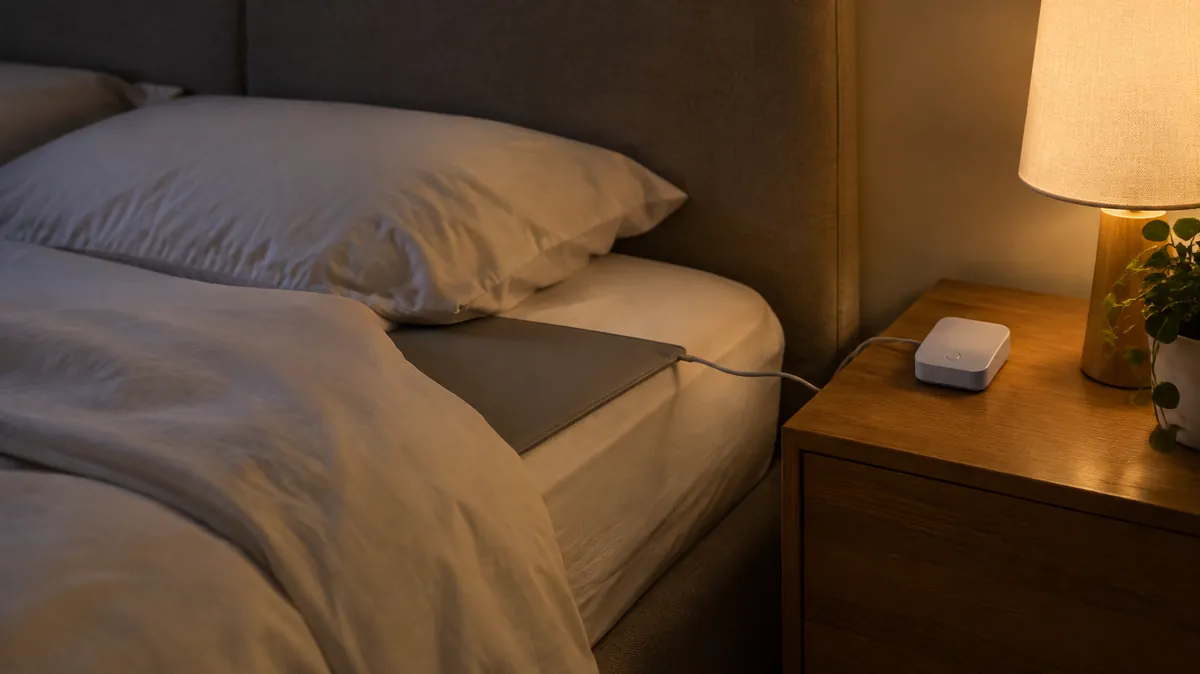
A bed alarm tells you that someone has moved in bed, sat up, or gotten out. That is all it does. It does not hold anyone up, and it does not stop a fall. For some families that alert is still worth having, particularly when a parent with dementia gets up at night and a caregiver is asleep in another room. For others it adds noise and worry without changing the outcome.
This guide explains the main types, what research says about them, and the questions that decide whether one fits your situation. We have not tested any of these devices, and we do not name a product as the best.
In this guide
What can a bed alarm do, and what can’t it?
It can wake you or send you a notification at the moment someone moves, so you can walk in, ask what they need, and steady them on the way to the bathroom. That is a real benefit when a person is unsteady, confused at night, or likely to wander.
What it cannot do is prevent the fall on its own. A 2022 systematic review and meta-analysis of fall-prevention trials in hospitals found that bed alarms, chair alarms and wearable sensors were not associated with significant reductions in falls. The only single approach with a significant result in the pooled analysis was patient and staff education.
An honest limit on that finding
That review looked at hospitals, and its authors state that they did not review falls at home or in residential aged care. A hospital nurse with many patients and a family member sleeping down the hall are very different situations, so the result does not prove alarms fail at home. It does mean you should not buy one expecting it to prevent falls. Treat it as an alert that buys you a minute or two, not as protection.
The main types compared
Product names vary a lot, but most bed alarms use one of a few sensing methods. These are typical descriptions of each type, not claims about any particular product.
| Type | How it works | Watch out for | Often suits |
|---|---|---|---|
| Pressure pad on or under the mattress | Senses weight on the pad and alerts when the weight leaves it | Needs to fit the mattress and sit flat. Shifting in bed or a pet can trigger it. | Someone who tends to get up alone at night |
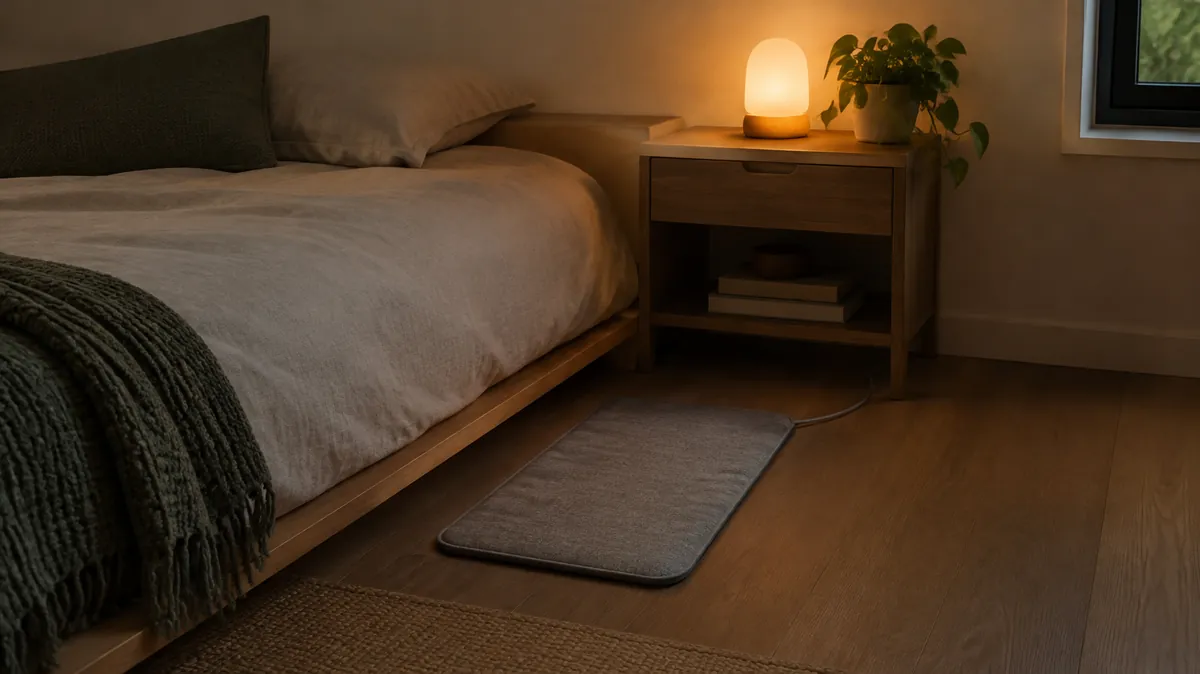
| Floor mat beside the bed | Alerts when someone steps on the mat | A mat on the floor is itself a trip hazard for an unsteady person. It alerts after they are already standing. | Someone who always exits on the same side, with a clear path |
| Motion or infrared sensor | Detects movement in a zone, such as someone sitting up or crossing the room | Can catch pets, blankets or a restless night. Placement matters. | Someone who tolerates nothing under or beside the bed |
| Clip-on pull cord | A cord clips to clothing and trips when the person moves away | Some people unclip it, or do not understand it. Not a good match for many people with dementia. | Someone who is aware of it and willing to wear it |
| App-connected sensor | Sends the alert to a phone through Wi-Fi or a hub | Depends on Wi-Fi, an app, and a phone that is on and nearby at night. Batteries and updates still need attention. | Caregivers who sleep elsewhere in the house and check a phone |
How does the alert reach you?
This is often more important than the sensor. Alarms generally alert in one of three ways:
- A loud alarm in the bedroom. It can startle or confuse some people and may leave them more disoriented at the moment they are on their feet. It also only works if you can hear it.
- A wireless receiver or pager you keep near you. The person in bed is not startled, and you can respond quietly.
- A phone notification. Convenient, but only if the phone is on, the app works, and you wake up for it.
If someone is sleeping close by, a quieter alert that goes to the caregiver is often a gentler fit for a person with dementia. Ask whether the alarm can be set to local, remote or both.
Who does a bed alarm fit?
It is most likely to help when your parent has already gotten up unsafely at night, a caregiver is in the home, and that caregiver can reach the bedroom within a minute or two. It is also a reasonable tool when a person with dementia gets up and wanders inside the house at night. For the bigger picture of when to use this versus door sensors or GPS, see our dementia monitoring devices guide.
It is less likely to help when no one is there to respond, because an alert nobody hears protects no one. In that case a door alarm, a different plan for nights, or a conversation with the doctor may do more. It is also a poor fit if your parent would be frightened by it, keeps removing it, or gets up many times each night, since constant alerts wear caregivers out and lead to alarms being switched off. If your parent is up repeatedly at night, mention it to their doctor, because there may be a cause worth looking into.
What should you ask before you buy?
- Who will hear it, and how fast can they get there? Be realistic about the middle of the night, not the best case.
- Does it alert when someone sits up, or only after they leave the bed? That sets how much warning you get and how many false alarms you will deal with. See the early-alert question below.
- Will it fit the mattress? Check the pad size and how thick a mattress it works with, and whether it works with a mattress cover or incontinence pad on top.
- Can the sensitivity be adjusted, and can the alert be silent at the bedside?
- What powers it, and how do you test it? Batteries die and cords get kicked out. Testing it on a regular schedule is part of owning one.
- Does it need Wi-Fi or an app? If so, what happens when the connection drops?
- What is the return window? Many alarms are easy to try and send back if they do not suit the person or the room.
- Does your parent know about it, and are they comfortable with it? Tell them what it is and why you want it. See our guide on what to do when a parent says no.
What matters more than the alarm?
Because an alarm is an alert, not a protection, the things that make a night fall less likely often do more. None of these is a substitute for medical advice.
- Talk to the doctor about why your parent is getting up or falling. Night-time falls can have causes that can be addressed, such as urgency to use the bathroom, lightheadedness when standing, or the effects of medications. The doctor or pharmacist can review the full list.
- Make the path safe. Night lights from bed to bathroom, clear floors, and a bed that is a comfortable height. Our bathroom safety checklist and home safety checklist cover the high-risk spots.
- Keep your parent moving during the day. See our fall prevention exercises guide.
- Ask a professional before adding bed rails. A doctor or occupational therapist can advise, since rails carry their own risks.
- Have a plan for a fall. If your parent is hurt or cannot get up, call emergency services. A medical alert system can help when someone is alone, which a bed alarm does not address.
Where to compare options
We link to a search for each type below so you can see current options, prices and reviews. These are not recommendations of any specific product.
Pressure pad with a wireless receiver
Motion or infrared bedside sensor
How we handle product links
AgingSteady earns a commission on some links, which is explained in our affiliate disclosure. We have not tested these devices ourselves, and the order of the options above has nothing to do with what we earn.
Medicare, assisted living and cost
Medicare. We could not find a Medicare source that lists standalone bed alarms as covered equipment, so do not assume they are. Original Medicare covers some equipment under its durable medical equipment benefit when a doctor documents medical necessity and a Medicare-enrolled supplier provides it. Medicare Advantage plans differ from one another. Our Medicare coverage guide explains how to check, and the safest step is to ask the supplier or your plan before buying.
Assisted living and nursing homes. Policies vary by facility. Ask what they use at night, who responds and how fast, and how they decide whether a resident needs an alarm. Our home care vs assisted living guide has more questions to ask a facility.
Cost. Prices change often, so check current listings. Simple pad or sensor alarms are generally inexpensive compared with monitored systems, and many have no monthly fee. Add up batteries, replacement pads and any app subscription.
Common questions
Do bed alarms prevent falls in elderly people?
Not by themselves. A bed alarm tells someone a person has moved; it does not stop the fall. A 2022 systematic review of hospital trials found bed and chair alarms were not associated with significant reductions in falls. That research was done in hospitals, not at home, so it does not settle how alarms work for a family member sleeping down the hall, but it is a good reason to treat an alarm as one tool among several.
What is the best bed alarm for an elderly person with dementia?
There is no single best one, and we have not tested any. What matters more than the brand is the match: an alert that reaches a person who can get to the bedroom within a minute or two, a sensor type that your parent will tolerate, and a sensitivity setting that does not trigger all night. Start with the questions in this guide, and buy from a seller with a return window so you can try it at home.
What is the difference between an early-alert and a bed-exit alarm?
Typically, an early-alert sensor warns when a person sits up or shifts toward the edge of the bed, which gives more time to respond but can trigger more false alarms. A bed-exit alarm usually sounds once weight has left the bed, which means fewer false alarms but a later warning, since the person may already be on their feet. Check each product's description to see which it does.
Are bed alarms allowed in assisted living or nursing homes?
It depends on the facility and its policies, so ask. Many facilities use their own alert systems or decide case by case whether an alarm suits a resident. Ask what they use, who responds at night and how fast, and how they decide whether a resident needs one. Do not assume your parent's care plan includes one.
Does Medicare cover bed alarms?
We could not find a Medicare source that lists standalone bed alarms as covered equipment, so do not assume they are. Original Medicare covers some equipment as durable medical equipment when a doctor documents medical necessity and a Medicare-enrolled supplier provides it, and Medicare Advantage plans differ. Ask the supplier or the plan before you buy, and see our coverage guide for how the rules work.
Should I tell my parent about a bed alarm?
Yes. Something that watches a person in their own bed should be something they know about and, where possible, agree to. A device that surprises or frightens someone can make nights worse, and a person who feels watched in secret is more likely to unplug or remove it.
One important caveat
This guide is general information for caregivers and is not medical advice. For decisions about your parent’s health or safety, including falls, night-time waking and medications, talk with their doctor.
Sources
Morris, M. E., Webster, K., Jones, C., et al. (2022). Interventions to reduce falls in hospitals: a systematic review and meta-analysis. Age and Ageing, 51(5), afac077. We read the full text of this review for the findings described above. We also looked at summaries of several other reviews of hospital bed and chair alarms, which point in the same direction, but we do not cite their figures here. Type descriptions are general and not tied to any product, and we have not checked them against manufacturer specifications. We welcome corrections through our contact page.