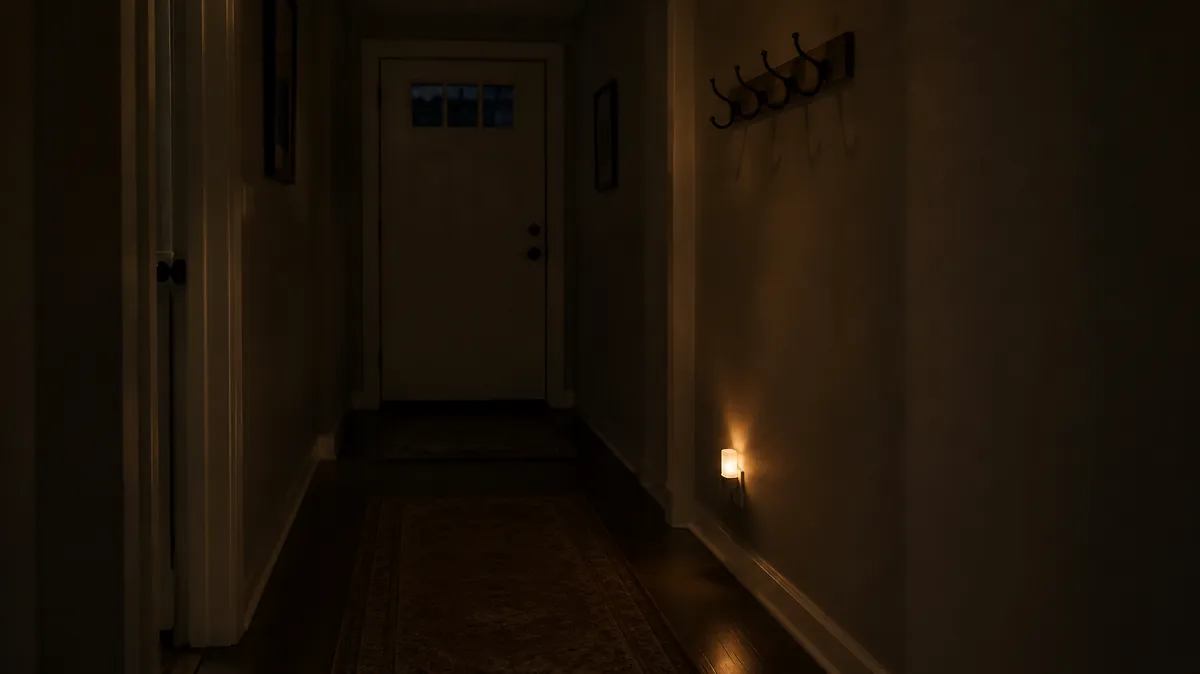
Many caregivers find that the hardest hours are the dark ones. A parent who is settled in the afternoon is up at 2 a.m., pacing, looking for the door, or sure that they need to go home. This guide explains what is known about why that happens, what usually helps, and how to make the house safer while you work on it.
We are an independent research site, not clinicians, and we have not tested any of the devices mentioned. The advice below comes from the Alzheimer’s Association, Mayo Clinic and a caregiver guide from the University of California, and it is general information. Your parent’s doctor knows their health and medicines.
If your parent is missing right now
Search close to home first, then call 911 if you cannot find them quickly and tell the operator that the person has dementia. The Alzheimer’s Association says most people who wander are found within about 1.5 miles of where they went missing. This guide is for planning ahead, not for an emergency in progress.
In this guide
Why wandering gets worse at night
The Alzheimer’s Association calls it sundowning: increased confusion, anxiety, agitation, pacing and disorientation that begin at dusk and continue through the night. It says the exact cause is unknown. It lists a few things that may contribute.
- Exhaustion. A day of coping with a confusing environment can leave a person worn out by evening.
- Other people’s stress. Body language and tone can add to the person’s own stress, especially when others are tired or frustrated.
- Dim light. Poor lighting creates shadows that a person may misread, which can increase agitation.
Mayo Clinic adds that night waking and restlessness can come from things you can sometimes fix: pain, constipation, a full bladder or an uncomfortable room temperature. It also notes that depression, sleep apnea and restless legs syndrome can cause sleep problems, and that some antidepressants and cholinesterase inhibitors can cause insomnia.
Wandering itself can happen at any stage. The Alzheimer’s Association lists restlessness, pacing and asking to go home while already at home among the warning signs, and says six in 10 people living with dementia will wander at least once, many repeatedly. That is an Association estimate, and published studies of how common wandering is vary widely.
When a sudden change needs a doctor
A slow worsening over months fits dementia. A sudden change over hours or days does not. The Care Ecosystem caregiver guide, hosted by UCLA, says sudden shifts in thinking or behavior are not simply part of dementia and may be a sign of delirium. It lists these common causes:
- infections, especially urinary tract and respiratory
- medicine side effects
- pain, dehydration, constipation and difficulty passing urine
- lack of sleep, poor nutrition and other medical conditions
The guide advises seeing the primary care provider as soon as possible, and it says to call 911 or go to a hospital if the person seems markedly different, is extremely distressed or has trouble breathing. It also helps to tell the doctor what happened right before and after the change.
Start with the day: routine, light and sleep
Most of what helps at night starts in the daytime. These are the points Mayo Clinic and the Alzheimer’s Association both make or support:
- Daylight. Spend time outdoors in the daytime. Mayo Clinic says sunlight may encourage less sleep during the day and more at night.
- Exercise. Mayo Clinic says walks and other physical activity can improve sleep at night.
- Skip long afternoon naps. Mayo Clinic advises avoiding afternoon napping, especially long naps.
- Keep the same times each day. Eating, waking and going to bed at the same times is a Mayo Clinic tip, and the Alzheimer’s Association recommends a regular routine that includes enjoyable activities.
- Limit caffeine, alcohol and nicotine. Mayo Clinic says they can make it harder to sleep.
- Schedule hard things for the morning. The Alzheimer’s Association suggests booking doctor visits, outings and bathing for the morning or early afternoon, when the person is usually more alert.
Make evenings calmer
- Keep the home well lit in the evening. This addresses the shadows that the Alzheimer’s Association links to agitation.
- Reduce stimulation. The Association suggests cutting back on television, household chores and loud music in the evening.
- Make lunch the main meal. The Association suggests a lighter evening meal.
- Trim liquids before bed, but do not stop them. The Association suggests cutting back on drinks up to two hours before bed to reduce bathroom trips.
- Try soothing activities. Calming music, looking at photographs or a favorite movie are the Association’s suggestions, and Mayo Clinic suggests reading aloud or soft music.
- Write down what happens before each episode. The Association says recording this can show patterns, such as a certain time, visitor or noise.
- Check the bedroom. Mayo Clinic suggests a comfortable temperature and keeping screens out of the bedroom.
What to do when they are up at night
- Stay calm and do not argue. Mayo Clinic advises asking what your parent needs. Your own stress can add to theirs, which is the Alzheimer’s Association’s point about nonverbal cues.
- Look for a reason. Pain, constipation, a full bladder and a room that is too hot or cold are the causes Mayo Clinic lists.
- Let them pace, with supervision. Both the Alzheimer’s Association (supervised pacing) and Mayo Clinic (let them pace, but keep them safe, since night wandering can be dangerous) say this.
- Do not restrain them. The Association says physical restraint can make agitation worse.
- Gently remind them it is night. Mayo Clinic suggests telling your parent it is time to sleep.
Make the house safer overnight
Routines lower the risk but do not remove it. The Alzheimer’s Association checklist includes these home measures, and several suit the night in particular:
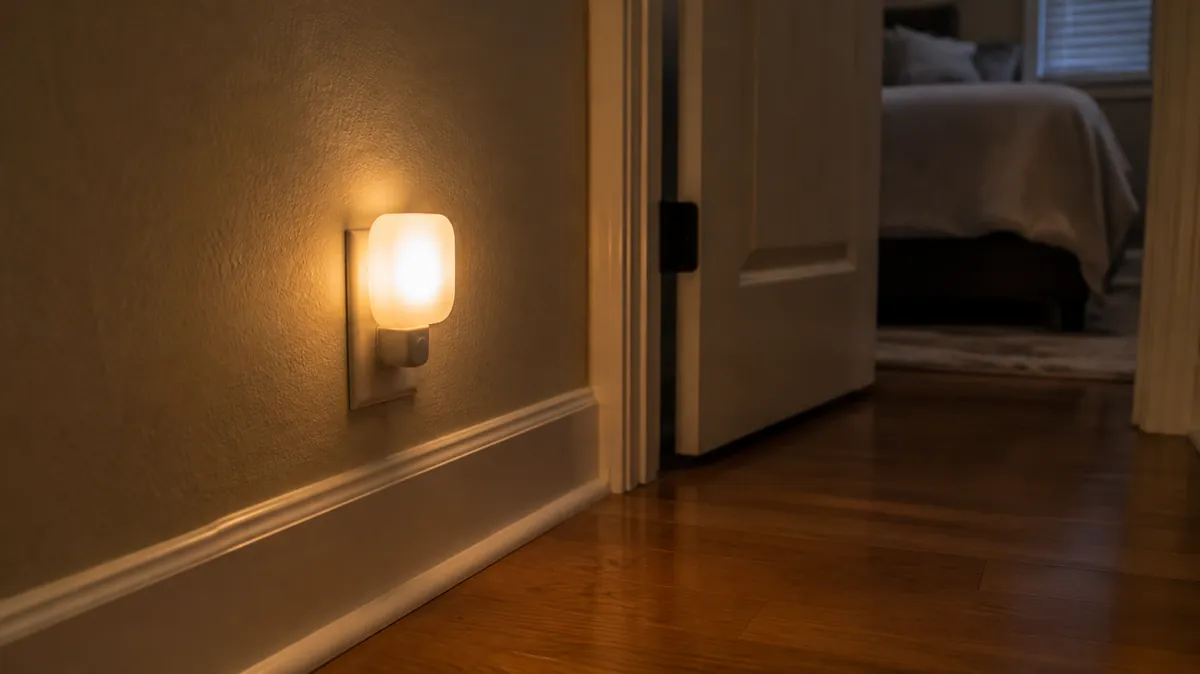
- Night lights throughout the home. They help with shadows and with finding the bathroom.
- Alarms or bells that signal when a door opens. See our guide to door alarms for dementia patients, including the rules on locks.
- Door knob covers, and doors painted the wall color or hidden behind a screen.
- Coats, hats, keys and wallets stored out of sight, since they can prompt a person to go out.
- Deadbolts placed high or low, out of direct sight. The Association says never to lock a person in at home.
- Gates or netting at stairs and outdoor access.
Our bed alarms guide covers devices that tell you someone has left bed, and includes a research caution: in hospital trials, bed and chair alarms were not associated with significant fall reductions, and those studies did not look at homes. The GPS tracker guide covers finding someone once they are outside, and our monitoring devices comparison sets the options side by side. If you are not sure which fits, the free device finder matches devices to your worry.
The Dementia Wandering Emergency Profile
A fillable, printable page with everything a search needs if a parent with dementia wanders — physical description, emergency contacts, and the places they're likely to head toward.
Protect your own sleep
Night wandering wears out caregivers. Mayo Clinic suggests asking family or friends to take over some nights, or contacting a social worker or your local Alzheimer’s Association chapter. The Alzheimer’s Association also says to get enough rest yourself, since your own tension can add to your parent’s. The Association’s 24/7 Helpline is 800-272-3900. If nights are no longer safe even with these steps, our guide to home care versus assisted living compares the options.
When to talk to the doctor
- The pattern persists after you have tried routine and environment changes. The Alzheimer’s Association advises raising it with the doctor in that case.
- You suspect a medicine is disturbing sleep. Mayo Clinic says to ask the healthcare team, and that some medicines work better when taken no later than the evening meal.
- You are thinking about a sleep aid. Mayo Clinic says sleep medicines raise the risk of falls and confusion in older adults with thinking or memory problems, so they are often not recommended for them. It also says melatonin may help with sleep and sundowning, but gives no dose, so ask the doctor and do not start one on your own.
- You see a sudden change in behavior or confusion. See the section above, and call promptly.
Common questions
Why does my parent with dementia wander at night?
There is rarely one cause. The Alzheimer's Association describes sundowning, a pattern where confusion, anxiety, agitation and pacing get worse from dusk through the night, and says its exact cause is unknown. It lists being worn out from a day of coping with a confusing environment, other people's stress picked up through body language and tone, and dim light that creates shadows as contributing factors. Mayo Clinic adds that pain, constipation, a full bladder, an uncomfortable room temperature, some medicines and other conditions such as depression or sleep apnea can disturb sleep.
How do I stop my parent with dementia from wandering at night?
You usually cannot stop it with one fix, but you can lower the odds and make the house safer. Keep a steady daytime routine with daylight and exercise, skip long afternoon naps, keep evenings calm and well lit, and check for pain or a full bladder. Add door alarms, night lights and out-of-sight keys and coats, and never lock your parent in. If the pattern persists, tell the doctor, since treatable causes and medicine side effects are worth ruling out.
Is wandering at night a sign of dementia?
It can be a sign of dementia, but it is not proof of it. The Alzheimer's Association lists restlessness, pacing and wanting to go home while already at home as warning signs of wandering in people with dementia. Wandering and night waking can also have other causes, so a new pattern in someone who has not had a diagnosis is a reason to see their doctor rather than to assume.
What should I do if my parent suddenly becomes much more confused or restless?
A sudden change over hours or days is different from slow decline. The Care Ecosystem guide hosted by UCLA says sudden shifts may be a sign of delirium and are not simply part of dementia. It lists infections (especially urinary and respiratory), medicine side effects, pain, dehydration and constipation as common causes, and advises seeing the primary care provider as soon as possible. If your parent seems markedly different, is extremely distressed or has trouble breathing, it says to call 911 or go to a hospital.
Should I lock the doors at night?
Not in a way that could trap anyone. The Alzheimer's Association says never to lock a person in at home, and advises placing deadbolts on exterior doors out of the person's direct sight. A lock in a fire or another emergency can be dangerous for both of you. An alarm that tells you a door has opened adds no lock, which is why families often start there. Our door alarms guide goes through the options.
What do I do if my parent is missing right now?
Search close to home first, and call 911 if you cannot find them quickly, telling the operator that the person has dementia. The Alzheimer's Association says most people who wander are found within 1.5 miles of where they went missing. A recent close-up photo and a list of places they like to go make the search faster. Our free wandering profile helps you prepare both before you need them.
One important caveat
This guide is general information for caregivers and is not medical advice. Decisions about medicines, sleep aids and your parent’s care belong with their doctor.
Sources
Alzheimer’s Association, Wandering and Dementia (wandering warning signs, the six-in-10 estimate, search guidance, evening and home safety tips) and Sundowning (a fact sheet on causes and coping tips). We read both in October 2026. · Mayo Clinic, Alzheimer’s: Managing sleep problems (read in October 2026; the sleep, medicine and night waking points come from it). · Care Ecosystem (UCSF), Delirium and Dementia Care, hosted by UCLA (the section on sudden changes). We could not open the National Institute on Aging’s wandering page, so nothing here is attributed to it. We have not tested any devices, and we welcome corrections through our contact page.