
One fall can be an accident. A second or third is a pattern, and it usually means something can be changed. This guide covers what to do right after a fall, what to bring to the doctor, which causes to look into, and when repeated falls mean your parent needs more support at home.
We are an independent research site, not clinicians, and we have not tested any product mentioned here. The medical points come from the CDC and are general information. Your parent’s doctor knows their health and medicines.
If your parent has just fallen
The CDC says an older person who falls and hits their head should see their doctor right away. Call emergency services if your parent hit their head, cannot get up, is in severe pain or seems confused. This guide is for what comes next, not for an emergency in progress.
In this guide
Why a fall with no injury still matters
The CDC reports that more than one in four adults 65 and older falls each year, and that less than half of them tell their doctor. It also says falling once doubles your chances of falling again, and that many people who fall, even if they are not injured, become afraid of falling. That fear can lead a parent to move less, which is the opposite of what helps.
The CDC also says falls do not have to be inevitable as you age, and that most falls are caused by a combination of risk factors, many of which can be changed. The full numbers, each linked to its source, are on our older adult falls statistics page.
Right after a fall
- Check before you move them. If they hit their head, cannot get up, are in severe pain or seem confused, call emergency services and follow their instructions.
- If they are unhurt, go slowly. Let them rest on the floor for a moment, then help them up in stages rather than pulling.
- Do not skip telling the doctor just because nothing seems broken. Write down what happened while it is fresh.
- Be kind about it. A parent who feels blamed is more likely to hide the next one.
Keep a simple fall log
This is our own suggestion, not a medical protocol, but it gives the doctor something specific to work with. After each fall or near fall, note:
- the date, the time and the room
- what your parent was doing: getting up, turning, climbing, carrying something, going to the bathroom
- footwear: shoes, slippers, socks or bare feet
- whether they felt dizzy, weak or lightheaded beforehand
- whether they were hurt, and whether they could get up alone
- any new medicine or change in dose in the days before
After a few entries, patterns often show: always at night, always on the way to the bathroom, always in the same spot. A pattern points to a fix.
What to raise with the doctor
The CDC’s advice for older adults and families starts with talking to the doctor about reducing fall risk. Its patient resources point to the following, and each is worth raising at the visit.
- Medicines. The CDC offers a fact sheet on how medicines can raise the risk of falling. Bring a full list, including over-the-counter products, and ask whether any could be contributing. Do not stop a medicine on your own.
- Eyesight. The CDC’s advice is to check your eyes.
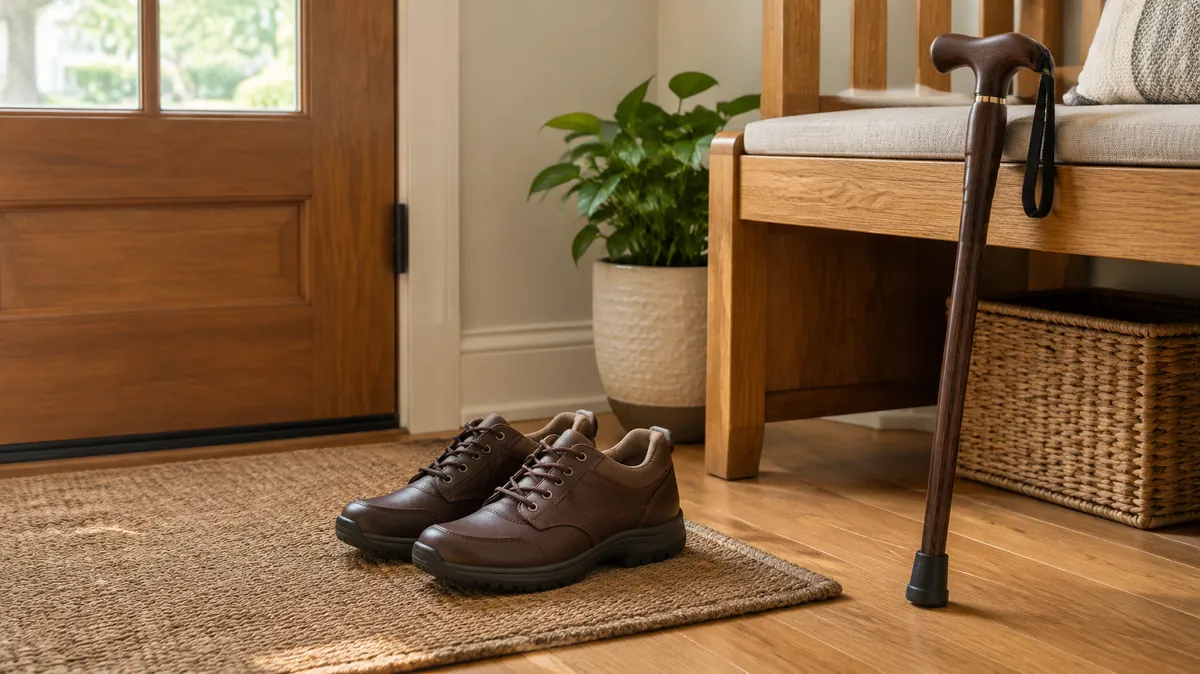
- Feet and footwear. The CDC has a fact sheet saying foot care and safe shoes can prevent falls.
- Activity and balance. The CDC says keeping active and maintaining balance helps prevent falls, and it lists a chair-rise exercise sheet. Our guide to fall prevention exercises covers programs with research behind them.
- The home. The CDC lists a home fall prevention checklist and advises removing clutter.
The CDC also has a caregiver fact sheet for families, and an online Falls Free CheckUp that lets your parent learn about their own risk. Ask the doctor whether a fall risk assessment is available.
Fix the home where the falls happen
This part is practical rather than clinical. Start where the log says the falls are.
- Bathroom. A wet floor, a high tub edge and nothing to hold are a common combination. See our bathroom safety checklist and grab bar guide.
- At night. Falls on the way to the bathroom often come down to light. Plug-in night lights along the route are cheap, and so is keeping the path clear.
- Getting up. A chair or bed that is too low or too soft is hard to rise from. Sitting for a moment before standing is free.
- Stairs. If the falls are on the stairs, see what stairlifts cost and the alternatives.
- Walking. If your parent is unsteady on their feet, a cane or rollator may help, and it needs the right fit. See our rollator guide.
- Rugs and clutter. Loose rugs, cords and piles on the floor are the easiest hazards to remove this afternoon.
The free room-by-room home safety checklist walks through all of these in about half an hour.
When your parent plays it down
Given that less than half of older people who fall tell their doctor, expect some of this. Ask about the situation instead of the fall: what were you doing, did your shoe catch, did you feel dizzy. Offer to come to the appointment. Tie the aim to what your parent cares about, which is usually staying independent and at home, not being safe in the abstract. If they refuse help altogether, our guide to an elderly parent who refuses help covers the conversations and which battles to pick.
Getting help faster after a fall
Prevention lowers the odds, but it cannot remove them. If your parent could lie on the floor for a long time before anyone knew, a way to call for help matters. A medical alert system is built for that, but it only works if your parent wears it. Fall detection, where offered, may not catch every fall, so read each company’s own description of what it can and cannot detect.
If the falls happen at night, our bed alarms guide covers devices that tell you someone has left bed. It also includes a research caution: in hospital trials, bed and chair alarms were not associated with significant fall reductions, and those studies did not look at homes.
When living alone stops being safe
Repeated falls are one of the most common reasons families start thinking about more support. Signs it may be time include falls that continue despite changes, falls at night or in the bathroom with no way to call for help, a parent who cannot get up alone, and falls that are hidden from you. Our guide to an elderly parent living alone covers the signs and what to try first. If you live far away, see long-distance caregiving, and for the cost of added support, home care versus assisted living.
The Aging Parent Emergency Info Sheet
Medications, contacts and legal info on one page, ready for a paramedic or hospital.
Common questions
Why does my elderly parent keep falling?
There is rarely one cause. The CDC says most falls are caused by a combination of risk factors, and that many of those factors can be changed. Common ones to check with a doctor include medicines, eyesight, footwear, balance and strength, and hazards in the home. A pattern in when and where the falls happen, written down in a simple log, helps the doctor look for the cause.
Should my parent see a doctor after every fall?
The CDC says an older person who falls and hits their head should see their doctor right away. For a fall with no injury, the CDC still says falls are worth raising: it reports that more than one in four older people falls each year, but less than half tell their doctor. Falling once doubles the chance of falling again, so a fall with no injury is still worth mentioning at the next visit, or sooner if it is happening repeatedly.
What should I do right after my parent falls?
Stay calm and check how they are before moving them. If they hit their head, cannot get up, are in severe pain or seem confused, call emergency services. If they are not hurt and want to get up, help them do it slowly and let them rest before walking. Then write down what happened and tell their doctor. We are not clinicians, so follow the instructions of emergency services or your parent's doctor over anything here.
My parent denies falling or says it was nothing. What can I do?
This is common, and the CDC's finding that less than half of older people who fall tell their doctor fits it. Fear can be part of it: the CDC notes that many people who fall, even if not injured, become afraid of falling. Try asking about the situation rather than the fall (what were you doing, were you dizzy, did your shoe catch), offer to come to the doctor visit, and frame the aim as staying independent. Our guide to an elderly parent who refuses help covers the conversations in more detail.
Can a medical alert system stop falls?
No. A medical alert system is meant to get help to your parent after a fall, not to prevent one. Whether it fits depends on whether your parent will wear it and how they live. Fall detection, where offered, may not catch every fall, so read each company's own description of what it can and cannot detect. Our medical alert comparison covers the types by situation.
When does living alone stop being safe after repeated falls?
There is no single rule. Warning signs include falls that keep happening despite changes, falls at night or in the bathroom with no way to call for help, a parent who cannot get up alone, and falls they hide from you. Our guide to an elderly parent living alone covers the signs and the steps to take before a move is the only option.
One important caveat
This guide is general information for caregivers and is not medical advice. Decisions about medicines, tests and your parent’s care belong with their doctor.
Sources
CDC, Facts About Older Adult Falls (the one-in-four, less-than-half-tell-their-doctor, doubles-the-chance, fear-of-falling, risk-factor and head-injury points), About Older Adult Fall Prevention (falls are not inevitable; the STEADI tools for providers) and STEADI patient resources (talk to your doctor, stay active, check your eyes, make your home safer, and the medicines, footwear and caregiver fact sheets). We read all three in October 2026, but we did not open the individual fact sheets, so we describe what each covers and not what it says. The fall log, the home fixes and the warning signs for living alone are our own practical suggestions, not CDC guidance. We have not tested any products, and we welcome corrections through our contact page.