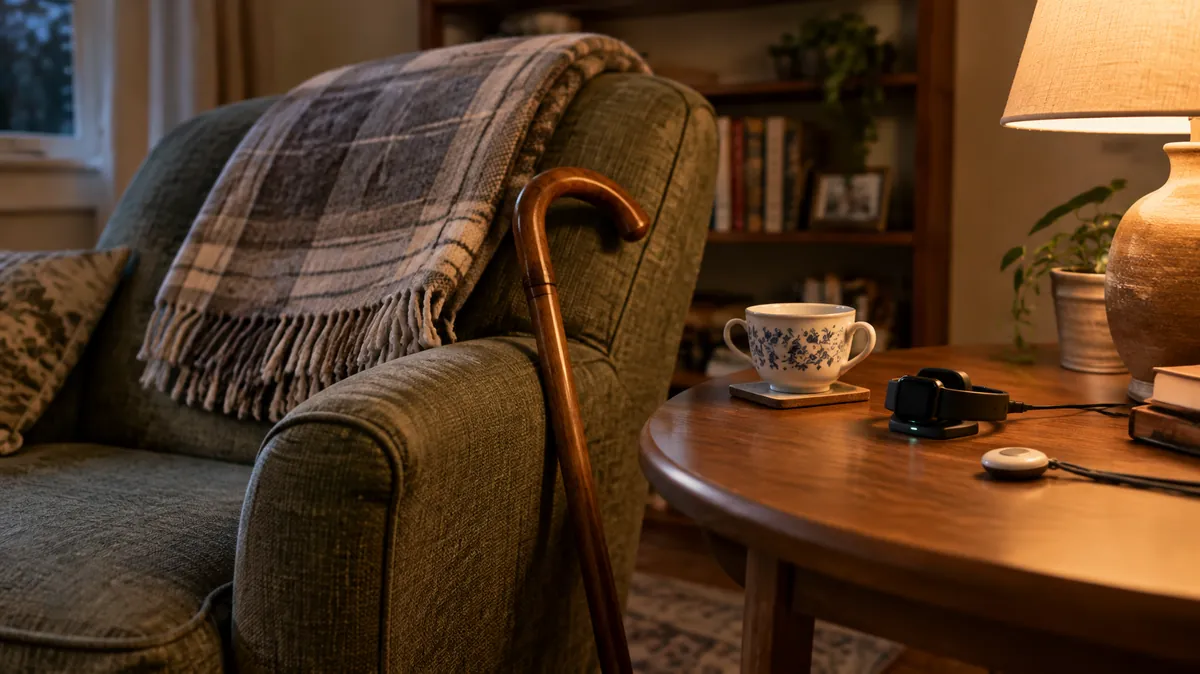
The worry behind this search is specific: your parent falls, cannot get up, and nobody knows for hours. Fall detection exists to shorten that gap. It helps, and it has real blind spots, so the goal is to choose a device your parent will actually wear and to understand what it will miss.
The CDC reports that about 1 in 4 adults aged 65 and older fall every year. This guide covers the main types of fall detection, how they differ for someone living alone, and what to check before you buy. We are an independent research site, not a medical provider, and nothing here is personal advice.
The short answer
For most parents who live alone, the best starting point is a worn device with automatic fall detection connected to a monitoring center, plus a manual button. If your parent will not wear anything, look at room sensors and add check-ins. No device catches every fall, so pair detection with a safer home.
In this guide
The main types, compared
| Type | How it works | Best for | Main weakness |
|---|---|---|---|
| Monitored pendant or wristband | Worn sensor detects a fall and connects to a monitoring center, or your parent presses the button | A parent who lives alone and will wear it | Only works if worn, charged and in range; monthly fee |
| Smartwatch | Detects a hard fall, then calls emergency services and contacts if there is no response | A parent who already wears a watch and manages a charger | No monitoring center; daily charging; small screen |
| Room sensor (wall or ceiling) | Senses movement or a fall in the room without anything worn | A parent who refuses to wear a device | Covers only the rooms it is in; features and prices vary widely |
| Bed and chair alarms | Alerts when the person leaves a bed or chair and does not return | Night risk and confusion | Detects leaving, not falling; limited to one spot |
| Activity or check-in monitoring | Learns normal movement and alerts when the routine breaks | Spotting that something is wrong, even without a fall | Slower to notice; not an instant alarm |
Our medical alert comparison covers the worn, monitored category in depth, including prices and contracts. For a parent with dementia, see dementia monitoring devices compared, and for night risk see bed alarms for elderly.
What fall detection misses
Apple’s support page says its Fall Detection cannot detect every fall, and that high-impact activity can trigger it by mistake. Other makers describe limits too. In practice, families should plan for these gaps:
- Slow falls. Someone sliding out of a chair or down a wall may not move in the way the sensor expects.
- Cushioned falls. A fall onto a bed, sofa or thick rug is softer and can be missed.
- The device is not on. The pendant is on the dresser, the watch is charging, or it was removed for the shower. This is the most common failure, and no technology fixes it.
- No connection. A device that relies on a phone, home base or cellular signal does not work out of range.
- False alarms. Sitting down hard or dropping the device can trigger an alert. Know how your parent cancels one, and warn your family it may happen.
This is why a manual button matters even when detection is automatic. It is also why the next section matters more than any feature list.
What changes when your parent lives alone
When someone else is home, a fall is usually noticed. When nobody is, the device is the only witness, and these questions matter more:
- Who gets the alert, and will they answer at night? A monitoring center always answers. Family phones may not. If no one is dependable, a staffed center may be worth the monthly cost.
- Can your parent talk through the device? Two-way voice lets an operator confirm what is happening and stay on the line until help arrives.
- Can emergency responders get in? A spare key arrangement, a keypad lock or a lockbox helps. Confirm how the provider handles entry.
- Is the bathroom covered? Many families worry about bathrooms and bedrooms most. Choose a device rated for water, or add a room sensor.
- Will they really wear it? Ask your parent. A device in a drawer protects nobody.
Our guide to an elderly parent living alone covers how to check in without taking over, and what to do when living alone stops being safe.
Wearable help button with automatic fall detection
Look for automatic fall detection and a manual button, two-way voice, waterproofing and clear battery life. Read how the product describes its fall detection, and note that no device catches every fall.
What to check before you buy
- Does it have automatic fall detection and a manual button?
- Is monitoring included, and what is the monthly fee and contract?
- What happens after a detected fall, step by step, and who is called?
- Can your parent cancel a false alarm easily?
- Is it waterproof, and can they wear it in the shower?
- How long does the battery last, and who will notice if it is low?
- Does it work throughout the house and yard, or only near a base?
- Is there a trial period or return policy? Test it with your parent before you rely on it.
If cost is a barrier, see whether Medicare covers medical alert systems and our guide to options with no monthly fee.
What to pair it with
Detection reacts after a fall. Prevention reduces how often it happens, and the two work together.
- Make the home safer. Our home safety checklist and bathroom safety checklist cover rugs, lighting, stairs and the shower.
- Look at why they are falling. If falls are repeating, read what to do when an elderly parent keeps falling, and talk to their doctor.
- Build strength and balance. See fall prevention exercises for seniors.
- Know the numbers. Our older adult falls statistics are sourced to the CDC.
- Keep key information ready. The free Emergency Info Sheet puts medicines, contacts and legal information on one page for paramedics.
The Aging Parent Emergency Info Sheet
Medications, contacts and legal info on one page, ready for a paramedic or hospital.
Common questions
What is the best fall detection device for an elderly person living alone?
There is no single best one. The strongest setup for most people who live alone is a worn device with automatic fall detection that connects to a monitoring center, plus a way to press a button manually. The right type depends on whether they will wear it, whether they leave the house and who can answer the phone.
Does automatic fall detection catch every fall?
No. Apple says its Fall Detection cannot detect every fall, and other makers say similar things about their devices. Slow slides, falls cushioned by a bed or rug and falls while the device is not worn can be missed, so keep a manual button as well.
What happens after a fall is detected?
It depends on the device. A monitored pendant usually connects your parent to an operator who can speak through the device and send help. A smartwatch typically sounds an alarm and, if there is no response, calls emergency services and emergency contacts. Ask any provider to walk you through exactly what happens and who is called.
Will my parent wear it in the shower?
Only if the device is waterproof and they remember. Many families worry about bathrooms and bedrooms most. Check that the device is rated for use in water, and consider a wall or ceiling sensor if your parent will not wear anything.
Are cameras a good option for fall detection?
They can detect some falls, but they raise privacy questions that many parents will not accept, especially in bedrooms and bathrooms. Talk with your parent first, and consider less intrusive options like a worn device or a motion sensor.
Is fall detection worth it if my parent has never fallen?
For a parent who lives alone, many families find it worth it as a backup. The CDC reports that about 1 in 4 adults aged 65 and older fall each year, and a fall is much more serious when nobody is there to notice.
One important caveat
This guide is general information for caregivers and is not medical advice. No device can guarantee that a fall is detected or that help will arrive. If your parent has fallen, is injured or may have a head injury, call emergency services. For repeated falls, talk to their doctor.
Sources
CDC, Older adult falls data (about 1 in 4 adults aged 65 and older fall each year). Apple Support, Use Fall Detection with Apple Watch (how it works, limits and connection requirements). We opened both in October 2026. The device types, comparison table and checklist are our own summary, not a ranking of products. We welcome corrections through our contact page.