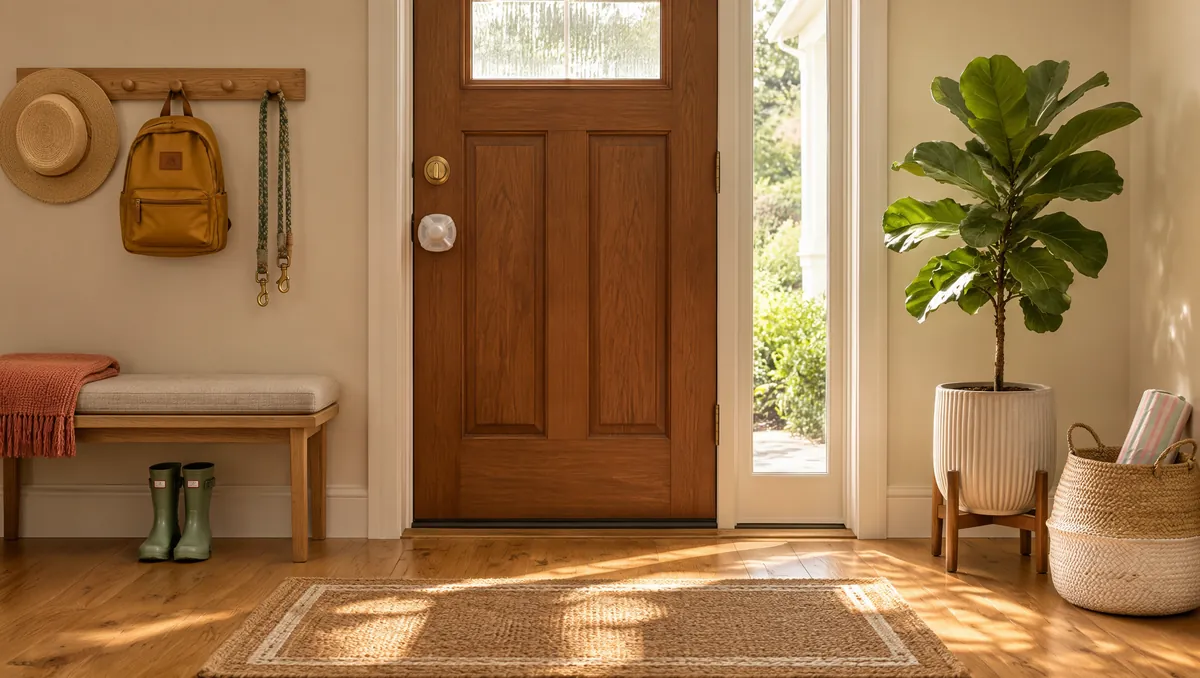
If your parent has started trying to leave the house, a lock looks like the obvious answer. It is also the option with the most serious downside. This guide covers where locks and latches can go, what the alternatives are, and how to think about a fire or other emergency before you change any door.
We have not tested any lock or device here, and nothing on this page is medical or fire-safety advice. Decisions about locks should involve your parent’s doctor and, where it matters, your local fire department.
In this guide
The safety problem with locks
Never lock a person in
The Alzheimer’s Association guidance on wandering says to never lock a person with dementia in at home. The reason is simple. In a fire or a medical emergency, a person who cannot open the door, or a rescuer who cannot get in, loses time that matters. Anything that needs a key, a code or an app to open from inside has this risk. If you are unsure what is safe in your home, ask your parent’s doctor, call the Alzheimer’s Association 24/7 Helpline at 800-272-3900, or ask your local fire department about the rules where you live.
That is why we suggest treating a lock as a late step and not a first one. The measures below come first, and most of them add no risk at all.
Options, from least to most restrictive
These are general descriptions, not claims about any product.
| Option | How it works | Watch out for | Often suits |
|---|---|---|---|
| Door alarm or chime | Sounds or alerts you when the door opens | Does not stop anyone leaving. Needs someone to hear it. | The first step for almost everyone. See our door alarms guide. |
| Camouflage and cues | Door painted like the wall, a removable screen, a stop sign, keys and coats out of sight | Works for some people and not for others | Early to middle stages, alongside an alarm |
| Door knob cover | A cover that needs a squeeze or twist to turn the knob | Can slow down a person who needs to get out in an emergency. Some adults can work it, some cannot. | A person who turns knobs without thinking but cannot work a cover |
| High or low latch or deadbolt | A latch placed above or below the person’s normal line of sight | Anyone who needs to get out must know where it is. Mount it where a helper can reach it. | When a doctor or care team agrees a stronger step is needed and someone is always home |
| Keyed lock or code lock from inside | Needs a key, code or app to open from the inside | The highest emergency risk of all. We do not suggest it without professional advice and a plan for fire. | Speak to the doctor and the fire department first |
| Smart lock | Reports the lock state to your phone and may unlock by code or app | Depends on batteries, Wi-Fi and an app. Check how it opens from inside. | Caregivers who want a log of who comes and goes, not a barrier |
What the Alzheimer’s Association says about placement
The Alzheimer’s Association home safety checklist, which we read in full in November 2026, makes these points about doors:
- Place a latch or deadbolt either above or below eye level on all doors.
- Install locks out of sight.
- Keep an extra set of keys hidden near the door for easy access.
- Remove locks on interior doors so the person cannot lock themselves in.
- Install a motion sensor on the garage door.
Notice what these have in common: the hardware is hard for the person to find, and easy for you to use. The spare key is not there to keep the person in. It is there so that you, or a helper, can open the door at once.
Doors inside the home
The main risk inside the home runs the other way: a person who locks themselves into a bathroom or bedroom. The Alzheimer’s Association checklist advises removing interior locks. UMass Memorial Health’s caregiver safety page says to remove inside door locks so your loved one does not get locked inside, and to keep a spare key outside the house in case the person locks you out. It also suggests door chimes to alert you when outside doors open.
Before you change a lock: five questions
- Has an alarm and a plan failed first? If you have not tried an alarm, cues and a walk routine, try those.
- Can the person get out in a fire? Walk through the worst case: smoke, the dark, and a person who is frightened and confused.
- Can a helper get in? Think about a neighbour, a paramedic, or you arriving after a fall.
- Is someone always home? A person who is locked in and alone is the situation the guidance warns against.
- Has the doctor been told? A sudden urge to leave, especially at night, can have a cause worth checking.
If the answer to the first question is yes and the exits still worry you, that is a conversation for the doctor, a geriatric care manager, and your local Alzheimer’s Association chapter, and it may be a sign to look at safer settings. Our home care vs assisted living guide covers that decision.
Where to compare options
We link to a search for each item so you can see current options, prices and reviews. These are not recommendations of any product, and we advise against any lock that needs a key or code to open from inside unless a professional has been involved.
Door knob covers
Door and window chime sensor
Slide bolt or latch for a high or low position
How we handle product links
AgingSteady earns a commission on some links, which is explained in our affiliate disclosure. We have not tested these products, and the order of the options above has nothing to do with what we earn.
The Aging Parent Emergency Info Sheet
Medications, contacts and legal info on one page, ready for a paramedic or hospital.
Common questions
Is it safe to lock a person with dementia in the house?
The Alzheimer's Association guidance we read says never to lock a person in at home. The practical reason is an emergency: if there is a fire, a fall or a medical event, a locked door can stop the person from getting out and stop help from getting in. If you are worried about a parent leaving the house, start with alarms, hidden or high and low hardware, and supervision, and talk to their doctor before you decide on anything stronger.
Where should the lock go on a door?
The Alzheimer's Association home safety checklist says to place a latch or deadbolt either above or below eye level on all doors, and to install locks out of sight. It also says to keep an extra set of keys hidden near the door for easy access, so that you and anyone helping can open it quickly.
Should I remove the locks on inside doors?
The Alzheimer's Association checklist says to remove locks on interior doors so the person cannot lock themselves in. UMass Memorial Health gives the same advice for bathroom doors. If you want privacy for dressing or bathing, ask your parent's care team about options that can be opened from outside.
Do door knob covers work?
We have not tested any, and we found no study on how well they work. They are a low-cost, low-risk option because they do not lock anything: some people with dementia cannot work the cover, and a person who can will open the door. Families often use them together with an alarm, so that a door that opens still alerts you.
Will a smart lock help with wandering?
A smart lock can tell you when a door is locked or unlocked and who opened it, which is useful, but it depends on batteries, Wi-Fi and an app. It does not stop a determined person from opening the door from inside, and a lock that stays locked has the same emergency problem as any other lock. Check how it opens from inside, what happens when the battery dies and whether a visitor or emergency responder can get in.
What if my parent keeps trying to leave at night?
Night exits are a sign that a lock alone is not enough. Our guide to dementia wandering at night covers routines, lighting and supervision, and the door alarms guide covers alerts that wake you. Tell your parent's doctor, because changes in night-time behaviour can have causes that can be treated.
One important caveat
This guide is general information for caregivers. It is not medical, legal or fire-safety advice, and local fire and building rules differ. Decisions about locks should involve your parent’s doctor and your local fire department. If someone is in danger, call 911.
Sources
Alzheimer’s Association, Home Safety Checklist (read in full in November 2026; the placement, interior lock and spare key points come from it). · Alzheimer’s Association, Wandering and Dementia (read in full in October 2026; the “never lock a person in” guidance comes from it). · UMass Memorial Health, For caregivers: Safety tips for people with dementia (read in November 2026; no review date shown on the page). · Michigan Medicine, Safety for People with Dementia (read in November 2026; last revised July 2020). Our table of options is our own general description and is not tied to any product. We welcome corrections through our contact page.