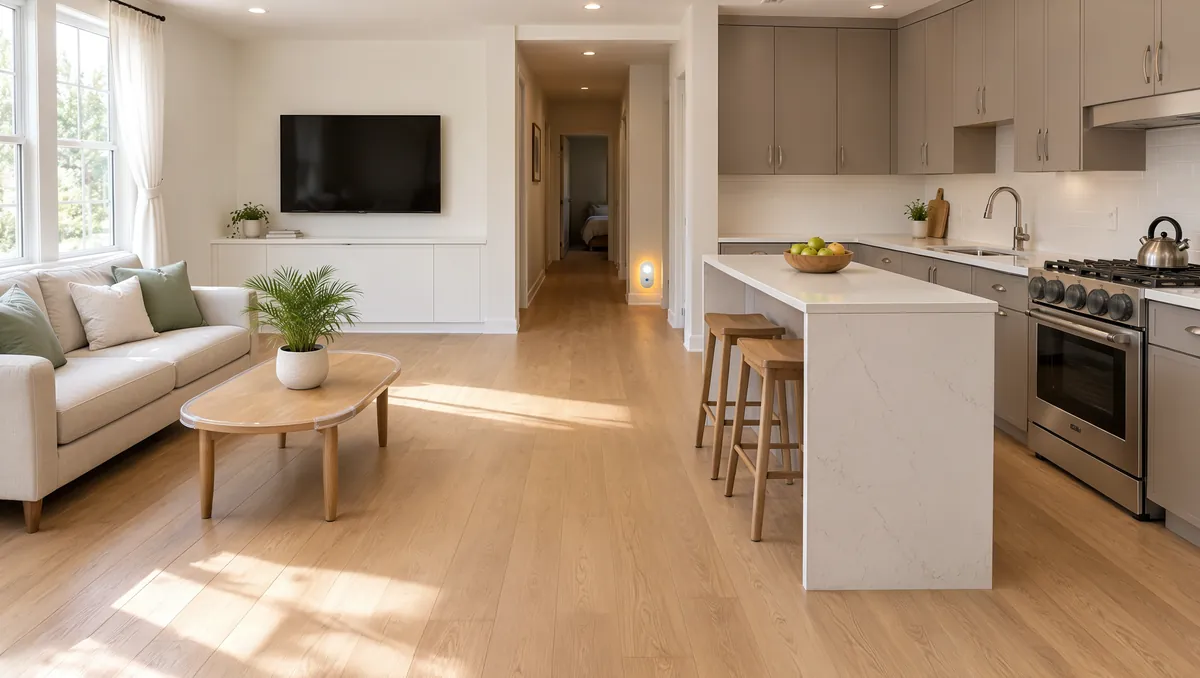
Dementia changes how a person sees, judges and remembers. A hot tap, a stove knob or a rug that was never a problem can become one. Dementia-proofing means finding those spots in your parent’s home and fixing the ones that matter most, without turning the house into something that feels like a hospital.
This guide goes room by room, using the Alzheimer’s Association home safety checklist, AARP, and caregiver safety pages from two health systems. We have not tested any product, and this is not medical advice. Ask your parent’s doctor or an occupational therapist to look at the home if you can.
In this guide
Three principles first
- Fix the highest-risk spots first. The Alzheimer’s Association says to evaluate the whole home and watch the higher-risk spots, since hazards are more likely in certain areas.
- Do not make it feel restrictive. The same checklist says to support independence and social interaction and to clear space for activities.
- Plan for emergencies. Keep a list of emergency numbers and addresses, including poison control. Our free emergency information sheet is made for this.
Doors and exits
- Place latches or deadbolts above or below eye level, install locks out of sight, remove locks from interior doors, and hide a spare key near the door (Alzheimer’s Association).
- Install a motion sensor on the garage door (Alzheimer’s Association).
- Add door chimes to alert you when outside doors open (UMass Memorial Health).
Locks carry a fire risk, so read our guides on door locks and door alarms before changing a door.
Kitchen and laundry
The kitchen is where fire and poisoning risks meet.
- Stove. Use appliances with an automatic shut-off. Prevent unsafe stove use with knob covers, removing the knobs, or turning off the gas when the stove is not in use. AARP suggests an automatic stove shut-off device if the person still cooks.
- Garbage disposal. Disconnect it.
- Things that look like food. Discard toxic plants and decorative fruit. Clear vitamins, prescription drugs, sugar substitutes and seasonings from the table and counters.
- Temperature. Watch food temperature, since hot and cold can be hard to tell apart. AARP says to serve food that is not too hot.
- The refrigerator. Clear out expired or spoiled food regularly (AARP).
- Laundry. Store cleaning products, including liquid laundry packs and bleach, out of sight and locked, in their original labelled containers. Consider safety locks on washers and dryers, and clean lint screens and dryer ducts regularly (Alzheimer’s Association). AARP says to clean the lint trap after every load.
Bathroom
AARP calls the bathroom a common place for falls and injuries and says an occupational or physical therapist can recommend equipment.
- Install grab bars at the shower, tub and toilet, and add textured stickers to slippery surfaces (Alzheimer’s Association).
- Consider a walk-in or no-step shower, a shower seat and nonslip flooring (both sources).
- Monitor water temperature or install an automatic thermometer or temperature-control faucets, to prevent scalding.
- Use night lights.
- Store cleaning products away from cosmetics and medicines so they are not confused (AARP).
- Remove inside door locks so the person cannot get locked in (Alzheimer’s Association, UMass Memorial Health).
For more, see our bathroom safety checklist, grab bars guide and walk-in tub vs walk-in shower.
Bedroom
- Closely monitor electric blankets, heaters and heating pads to prevent burns (Alzheimer’s Association).
- Place seating near the bed to help with dressing, and keep closet shelves at a reachable height so the person does not need to climb or reach overhead.
- Use night lights.
- AARP suggests assessing how much help the person needs getting in and out of bed, and lists a lower bed, bed-assist bar, padded floor mats and alarms as options. Our bed alarms guide compares the alarms.
Living areas, stairs and lighting
- Remove throw rugs, extension cords and clutter that can cause trips.
- Secure bookshelves, cabinets and large TVs so they cannot tip.
- Use chairs with armrests to help with sitting and standing.
- Light stairways evenly, without sudden changes in light level. Add lights to entries, outside landings and the areas between rooms, stairways and bathrooms (Alzheimer’s Association).
- AARP suggests bright, low-glare lighting, since shadows can be confusing and frightening, and motion-sensor lights at night.
- AARP also suggests light, solid-colour walls over busy patterns, contrast between wall and floor colours to help with depth perception, and bright tape on step edges. Its article dates from 2017, so check current advice with your parent’s care team.
For falls more generally, see our guide to a parent who keeps falling and stairlift alternatives.
Medications, firearms, garage and outdoors
- Medications. Store them in a locked drawer or cabinet, and use a pill organizer or a daily checklist to confirm each dose. Our free daily checklist and log has a space for this.
- Firearms. Consider removing them from the home or storing them in a locked cabinet. The Alzheimer’s Association says that as the disease progresses a person may mistake a familiar family member for an intruder.
- Garage, basement and workroom. Monitor them for tools, chemicals and cleaning supplies. Limit access to large equipment such as mowers and snow blowers, and store gasoline and paint thinner out of reach.
- Outdoors. Monitor outside areas where tools and chemicals may be found, and light outdoor entries and landings.
- Detectors. Check smoke and carbon monoxide detectors and fire extinguishers regularly, and replace batteries twice a year at daylight saving time.
If you are deciding whether your parent can stay home at all, see can you leave a person with dementia home alone.
Where to compare products
We link to a search for each item so you can see current options, prices and reviews. These are not recommendations of any specific product.
Automatic stove shut-off or knob covers
Motion-sensor night lights
Locking medication cabinet or box
How we handle product links
AgingSteady earns a commission on some links, which is explained in our affiliate disclosure. We have not tested these products, we show no ratings, and the order above has nothing to do with what we earn. Your local Area Agency on Aging may know of programs that help with the cost of home safety changes.
The Aging Parent Emergency Info Sheet
Medications, contacts and legal info on one page, ready for a paramedic or hospital.
Common questions
Where should I start when dementia-proofing a home?
The Alzheimer's Association checklist says to evaluate the whole home and to watch the higher-risk spots. A practical order is the exits and the kitchen first, then the bathroom, then the bedroom and lighting. Our room-by-room list below follows that order. Ask your parent's doctor or an occupational therapist to look at the home if you can, since AARP notes that a therapist can recommend equipment such as grab bars.
Will making the home safe make it feel like an institution?
It can if you overdo it. The Alzheimer's Association checklist says to keep the home from feeling too restrictive, to support independence and social interaction, and to clear space for activities. Change the hazards that matter most, and leave familiar furniture and photos where they are.
Should I remove the stove?
Not necessarily. The Alzheimer's Association suggests appliances with an automatic shut-off, stove knob covers, removing the knobs, or turning off the gas when the stove is not in use. AARP also suggests an automatic stove shut-off device if the person still cooks. Which fits depends on whether your parent still cooks and whether anyone is there.
What about firearms?
The Alzheimer's Association checklist suggests considering removing firearms from the home or storing them in a locked cabinet, because as the disease progresses a person may mistake a familiar family member for an intruder. Talk to your parent's doctor and family about what is right for your situation.
How often should I check the safety measures?
Needs change as the disease progresses. The Alzheimer's Association says to check smoke and carbon monoxide detectors and fire extinguishers regularly, and to replace batteries twice a year at daylight saving time. A quick review whenever you notice a new behaviour is a sensible habit, and it helps to log what you see in our daily checklist.
One important caveat
This guide is general information for caregivers. It is not medical or safety-engineering advice. Ask your parent’s doctor or an occupational therapist what suits their situation, and use a qualified electrician or installer for anything wired or fitted. If someone is in danger, call 911.
Sources
Alzheimer’s Association, Home Safety Checklist (read in full in November 2026; most of the room-by-room items come from it). · AARP, Dementia Care: Home Safety Tips (read in November 2026; published February 5, 2017, so some advice may be out of date). · UMass Memorial Health, For caregivers: Safety tips for people with dementia (read in November 2026; no review date shown). · Michigan Medicine, Safety for People with Dementia (read in November 2026; last revised July 2020). The ordering of rooms and the product searches are our own. We welcome corrections through our contact page.